
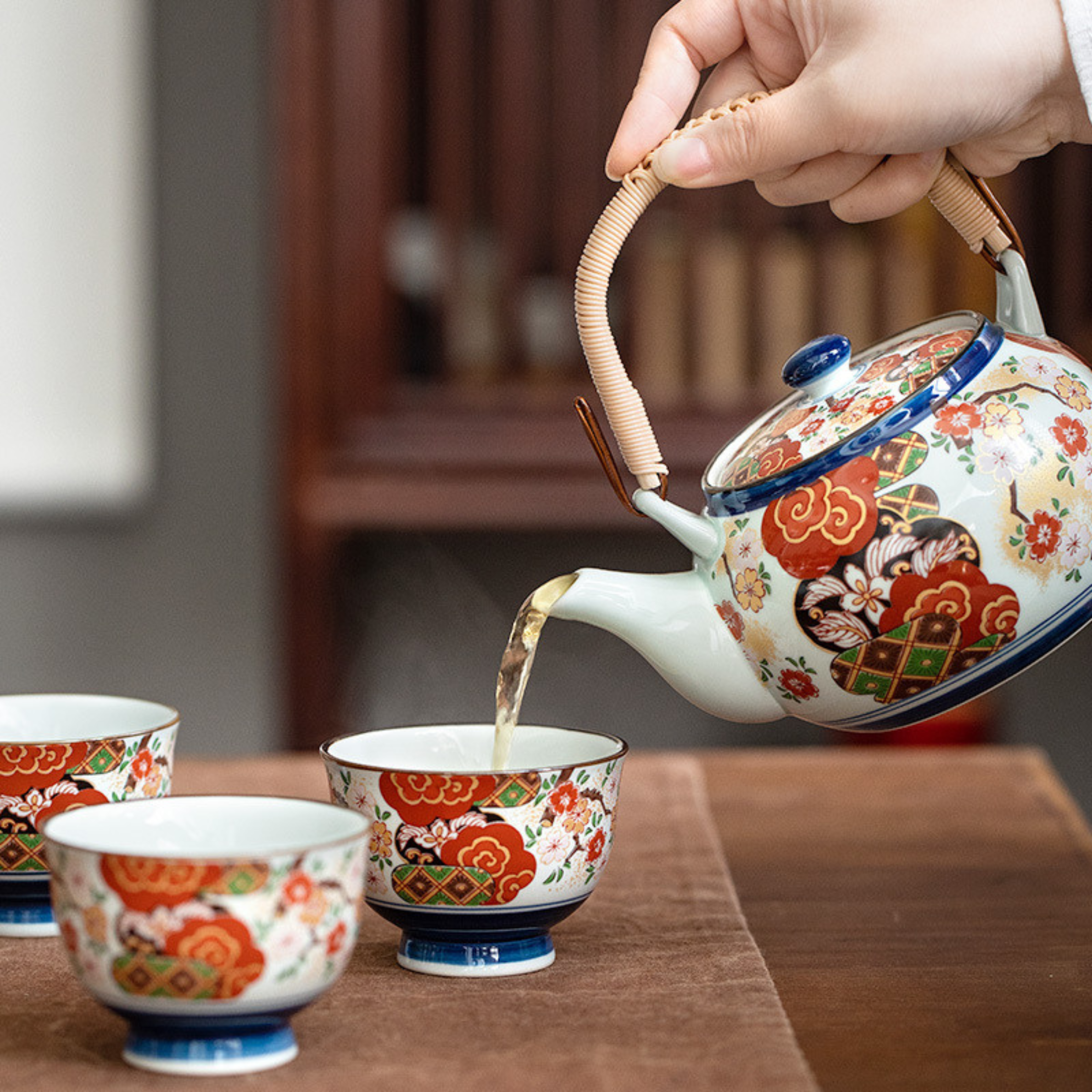
What does gifting a tea set mean?
Giving a set of Japanese tea ware is a profoundly meaningful way of communication, conveying emotions through the silent language of clay, bamboo, and ritual. Such a gift is far more than a collection of practical objects; it embodies a philosophical concept, an invitation to a particular state of mind, and a symbol of a relationship, one that is expressed through aesthetics cultivated over centuries. In Japan, the birthplace of the tea ceremony, each object carries a specific meaning, and giving tea ceremony utensils signifies the bestowal of a profound blessing.

The Embodiment of Wabi-Sabi: A Gift of Imperfect Beauty
The ultimate meaning behind a Japanese tea set is its physical expression of wabi-sabi, the worldview finding profound beauty in impermanence, asymmetry, and natural simplicity. The gift is, therefore, a lesson and a blessing in this aesthetic.
-
The Beauty of Flaws: APrecious tea bowls are rarely perfect. Their shape might be slightly deformed, the glaze uneven, revealing the clay beneath (known as "penetration"), or the maker's fingerprints might be left on the rim. Giving such a tea bowl, perhaps a simple, handcrafted, raku-fired bowl, expresses a philosophy: true character and substance come from uniqueness and the authentic traces left during the creation process. It tells the recipient that their sincerity and authenticity are more valuable than conventional perfection.
-
Honoring Transience: The materials themselves—earthy clay, bamboo that will patina with age—speak of the natural cycle. To give objects meant to change and mature with use is to honor the present moment. It is a wish for mindfulness, an encouragement to cherish the fleeting, quiet joy found in preparing a single bowl of tea.
-
The Elegance of Restraint (Shibumi): A Japanese set exemplifies shibumi: a quiet, austere, and deeply impactful elegance. Its beauty is not announced but discovered. Choosing such a gift expresses a belief in the recipient’s refined sensibility and inner quiet, their ability to appreciate whispers over shouts.

The Symbolism of the Pieces: Intentions in Form
Each component of a traditional set carries specific symbolism, allowing the gift to be nuanced and personal.
-
Chawan (The Tea Bowl): The most intimate item. To select a chawan for someone is a deeply considerate act, as it should suit the user's hands and lips. It represents the vessel of the self and of shared experience. A bowl for thick koicha suggests a desire for deep, formal connection; a bowl for light usucha implies more frequent, casual communion.
-
Chasen (The Bamboo Whisk): This tea whisk is crafted from a single piece of bamboo, with its delicate bamboo bristles skillfully blending different elements to create a harmonious beauty. Giving a tea whisk as a gift symbolizes the hope that the recipient will also create harmony in their life. As a consumable tool, it also gently embodies the natural cycle of use, wear, and renewal.
-
Chashaku (The Bamboo Scoop): Often hand-carved by the practitioner, this scoop is a highly personal object. Receiving one, especially one made by the giver, is a token of tremendous trust and personal connection. It represents the careful measure of things, of intention, and of sharing something precious.
-
Natsume or Chaire (The Tea Caddy): The container for the precious matcha powder. Gifting one implies the offering of something sustaining and valuable—the essence of the tea, and by extension, of friendship, focus, or tranquility.
-
Kensui (The Waste Water Bowl): This seemingly insignificant object holds profound meaning. It symbolizes humility, the acceptance and graceful handling of things that are no longer needed, and the completion of a ritual cycle. It reminds us that true elegance is reflected in every action.

The Context of the Gift: A Gesture Tailored to the Relationship
The occasion and relationship give the gift its full resonance.
-
For a Mentor or Teacher: Presenting a set to a sensei is a supreme gesture of gratitude. It acknowledges lessons in perception and discipline, saying, "You have taught me to see the world differently. I honor your path by walking it with these tools."
-
For a Wedding or New Home: This gift, prepared for a new life, is a beautiful wish for a harmonious and meaningful life. It wishes the recipient to embrace living in the present moment and to create a peaceful and tranquil haven in their home.
-
For a Friend: This is an invitation to ichigo ichie—"one time, one meeting"—the concept that each encounter is unique and will never recur. It says, "Let us create a moment of true connection, fully present with each other."
-
For a Personal Milestone: It marks a commitment to a slower, more contemplative chapter. It is a tool for self-cultivation, a companion for introspection and peace.

Conclusion: An Offering of a Worldview
To gift a Japanese tea set is ultimately to offer a portal to a different pace and perspective. It is an invitation to practice seijaku—tranquility and stillness. The gift is not an expectation of mastery, but a hope that the recipient might find, in the ritual of preparation, a moment of focus, respect, and pure awareness.
This is a gift imbued with tranquility. Every time you pick up the teacup, its weight and texture allow the user to be fully present in the moment, and in this way, the gift fulfills its purpose. It becomes a silent yet lasting reminder: stop. Live in the present moment. Everything is contained within this simple moment.

Hinterlasse einen Kommentar
Diese Website ist durch hCaptcha geschützt und es gelten die allgemeinen Geschäftsbedingungen und Datenschutzbestimmungen von hCaptcha.