
A Dragon's Dance in Crystal
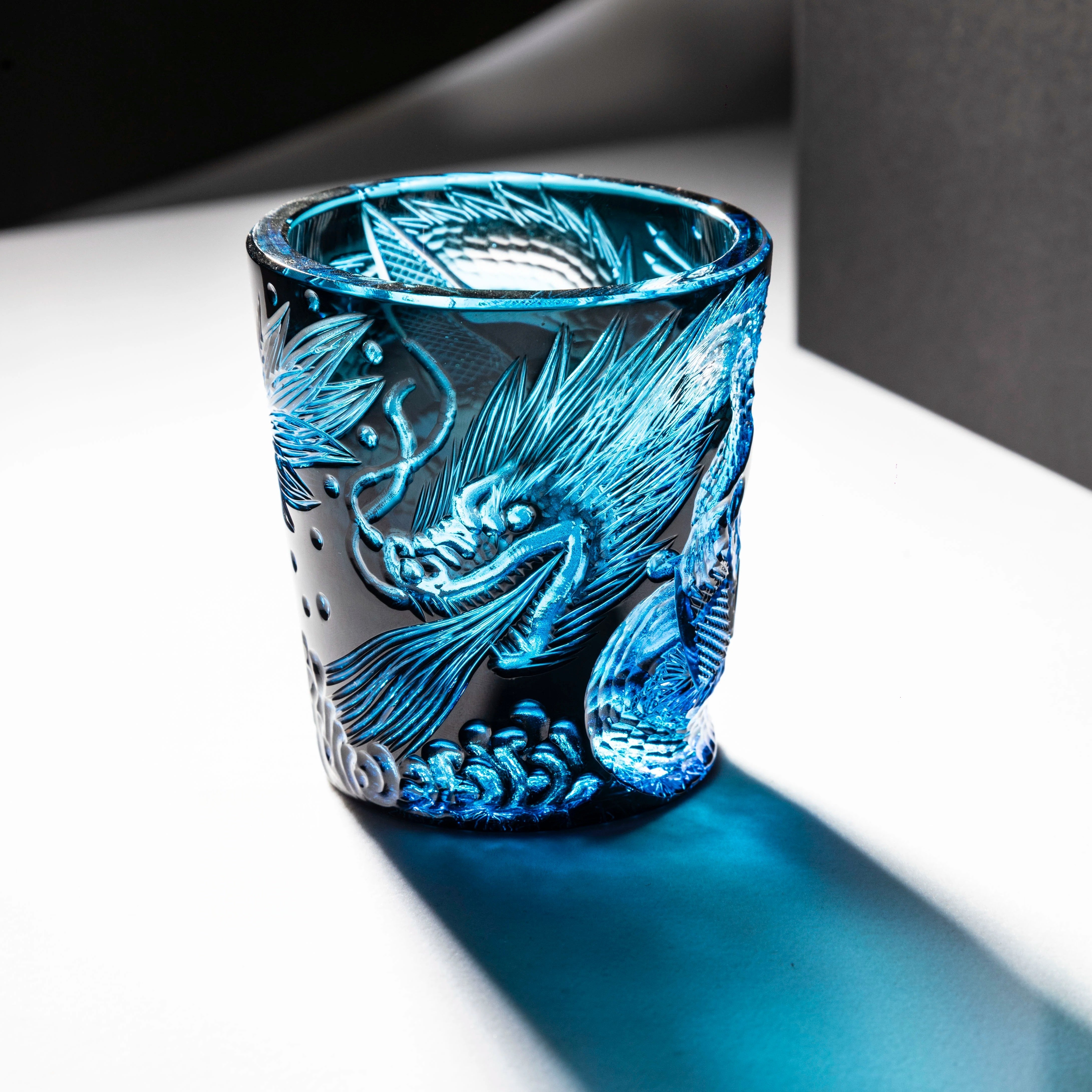
The Edo Kiriko Handcrafted Ryujin Asanoha Whisky Glass
Few objects in the realm of traditional craftsmanship radiate the distinctive brilliance and vibrant vitality of Edo Kiriko glassware. Among these, the hand-crafted "Dragon God Hemp-Leaf Pattern" whisky glass stands as a paragon of modern excellence; it seamlessly fuses the primal power of the dragon with the serene resilience embodied in the ancient hemp-leaf motif—all brought to life through techniques honed in Tokyo over nearly two centuries.

The Dual Nature of Irokise Glass
The Ryujin Asanoha Whisky Glass exemplifies the distinctive irokise technique that defines the finest Edo Kiriko. The process begins with an expert glassblower creating a two-layered structure: a clear crystal interior enveloped by a thin overlay of colored glass, typically less than one millimeter thick. This method, known as pokan, produces a piece with a transparent interior and a vibrant exterior surface. The deep blue of this particular glass serves as a canvas for the artisan's cuts, allowing light to penetrate the colored layer and illuminate the clear crystal beneath with extraordinary brilliance. This contrast—the vivid outer color meeting the clarity within—is the very essence of Edo Kiriko's aesthetic appeal.
The Dragon's Coil: Design and Symbolism
The central motif of this glass vessel is the dragon—a symbol in East Asian tradition representing wisdom, power, protection, and the dynamic flow of natural energy. The artisan has rendered the dragon’s form with exquisite detail using a deep-relief technique; the creature’s body winds fluidly through waves and clouds, creating a sense of vibrant motion that makes it appear almost lifelike as light and shadow shift across the surface. From the graceful, flowing whiskers and powerful contours to the intricately layered scales, the carving demonstrates extraordinary precision, showcasing masterful skill in executing such complex ornamentation on glass.
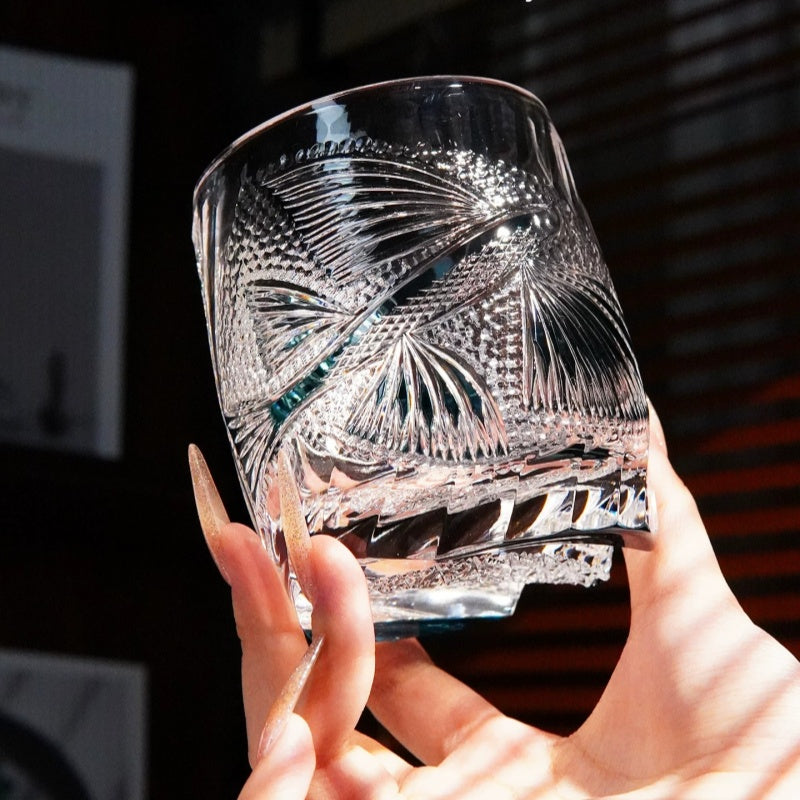
At the base rests the Asanoha (hemp leaf) pattern, a traditional motif that has endured for centuries. In Japanese culture, the hemp leaf symbolizes growth, resilience, and protection—qualities associated with the plant's remarkable vitality. The repeating diamond-shaped motif creates a brilliant refractive effect beneath the glass, illuminating the entire piece from below as light passes through it. This interplay of light and shadow—a fundamental principle of Japanese aesthetics—transforms a simple whisky pour into a visual ritual.
Craftsmanship Without Blueprints
The creation of the Ryujin Asanoha Whisky Glass follows a meticulous process that relies entirely on the artisan's trained eye and steady hand. Unlike many crafts, there are no detailed sketches to follow—only the artisan's vision and years of accumulated experience.
The process begins with sumitsuke, where the artisan marks a simple grid of red iron oxide lines on the glass surface using a bamboo stick or brush. These lines, applied without a pre-drawn design, provide the framework for the entire composition. Next comes the arazuri rough cutting stage, where a metal disc coated with abrasive emery powder etches the basic outlines of the pattern. This is followed by detailed cutting with finer abrasives, where the artisan meticulously carves the dragon's features and the repeating Asanoha motif.
The polishing stage is where the glass truly comes to life. The matte surfaces left by cutting are transformed through multiple steps: first with natural whetstones from Kyushu, then with wooden wheels made of paulownia or willow, and finally with cloth buffs. This painstaking work returns the glass to its original transparency while amplifying the sparkle and luster that Edo Kiriko is renowned for. The entire process, from marking to final polish, represents a tradition passed down through generations of Tokyo artisans.
An Object of Modern Ritual
With its weighted structure and smoothly polished rim, the Ryujin Asanoha Whisky Glass provides a balanced, comfortable feel in hand that enhances the experience of whisky and aged spirits. It transforms each pour into a ritual of appreciation—not just of the spirit within, but of the centuries of craftsmanship that shaped the vessel itself. Presented in a wooden box, it stands as a striking expression of Japanese artistry, blending the dragon's power with the geometric precision of Edo Kiriko.
In an age of mass production, this handmade glass is a defiantly individual object—each one bearing the subtle variations that mark it as the work of human hands. To hold it is to hold a piece of living tradition, a craft that has survived the Meiji Restoration, two world wars, and the tides of modernization to emerge as a luminous jewel of Japanese cultural heritage.

Leave a comment
This site is protected by hCaptcha and the hCaptcha Privacy Policy and Terms of Service apply.