

What's the easiest whiskey to drink?
"Which whisky is the easiest to drink?" This is a question every newcomer to spirits eventually asks. Fortunately, the answer is no secret. Experts, bartenders, and seasoned enthusiasts consistently recommend whiskies that share certain characteristics: a mild alcoholic bite (or "throat burn"), a balanced level of sweetness, and an absence of overpowering smoky or medicinal notes. Understanding what makes a whisky "easy-drinking" is the first step toward finding a bottle that suits your personal taste.

What Makes a Whiskey Easy to Drink?
"Easy drinking" is not merely a vague compliment; it refers to a specific sensory experience. For most beginners, the primary hurdle is the "burn" caused by alcohol—that sharp, throat-stinging sensation characteristic of high-proof spirits. Generally, a whisky with 40% ABV (80 proof) will feel smoother on the palate than one with 50% ABV or higher. Greater distillation frequency often results in a smoother spirit, which is why triple-distilled Irish whiskeys are frequently recommended to novices.
Flavor profile is equally crucial. Whiskies featuring sweet notes—such as vanilla, caramel, honey, and fruit—tend to be more approachable than those characterized by heavy smoke, peat, or intense spice. The raw materials (or grain mash bill) play a pivotal role here. For instance, Bourbon requires a minimum of 51% corn, imparting a natural sweetness; meanwhile, Scotch whiskies from the Speyside region typically offer a light, sweet, and clean profile, lacking the intense peaty smokiness found in whiskies from Islay.
The Experts' Consensus: Bottles That Keep Appearing
When bartenders and spirits experts are asked for beginner recommendations, certain bottles appear again and again.
Monkey Shoulder is perhaps the most frequently cited blended Scotch for newcomers. Made from a blend of three Speyside single malts, it delivers vanilla, honey, and fruity marmalade notes with a mildly spiced finish. An expert described it as a "Speyside blended whisky" with a palate featuring "notes of vanilla and spice, and absolutely no harsh burn." Priced at approximately $33 to $50 per bottle, it is quite affordable.
Glenmorangie Original 12 occupies similar territory. A Highland single malt bottled at 40% ABV, it offers citrus, vanilla, and sweet stone fruit on the palate, leading to a mildly spicy finish. One reviewer noted its "creaminess of mouthfeel that makes this endlessly drinkable," calling it "a great place for a Scotch beginner to get started". Another described it as "light, sweet, and low complexity. Easy as water to drink".
For those interested in bourbon, Maker's Mark is a recurring recommendation. Unlike many bourbons that use rye as a secondary grain, Maker's Mark uses red winter wheat, which softens the whiskey's profile and dials back the peppery spice. The result is a bourbon that lets caramel, vanilla, and toasted oak take center stage. Basil Hayden, another bourbon, is bottled at just 80 proof and contains nearly 30% rye, giving it a touch of spice to balance its sweetness. One reviewer described it as "an easy drinker with some pep".
Gentleman Jack, the double-mellowed Tennessee whiskey from Jack Daniel's, earns consistent praise for its smoothness.This whisky undergoes a double filtration process through sugar maple charcoal—with a filtration bed 10 feet deep—which removes harshness and imparts a "silky-smooth texture" along with notes of caramel, vanilla, and honey. One reviewer noted that it "lacks the harsh spiciness found in some whiskies."
What to Avoid as a Beginner
Knowing which whiskies to avoid is just as important as knowing what to drink. Heavily peated Scotch whiskies from Islay—such as Laphroaig, Lagavulin, and Ardbeg—are renowned for their intense, complex profiles featuring notes of peat smoke, seaweed, brine, and iodine. These flavors often require an acquired taste; even seasoned enthusiasts approach them with a sense of awe, and for beginners, the intensity can be overwhelming.
Additionally, beginners should steer clear of high-proof whiskies, typically labeled as "barrel proof" or "cask strength." Bottled at the same alcohol concentration as when they were drawn from the cask, these whiskies often exceed 60% ABV. While they offer rich, bold flavors, they also deliver an intense alcoholic burn.
How to Drink Your First Whiskey
The way one drinks whisky is just as important as the spirit itself. Experts recommend starting by drinking it "neat"—pouring a small amount into a glass without ice or water—and sipping it slowly. It often takes three sips for the palate to adjust and the whisky's flavors to fully reveal themselves. If the alcoholic burn feels too intense, adding a few drops of water or a single ice cube can "awaken" the spirit and soften the mouthfeel without completely diluting its distinctive character.
For some beginners, starting with cocktails may be a better way to appreciate the allure of whisky. Classics like the Whiskey Sour and Old Fashioned, or a Highball—made with soda water and a twist of lemon peel—offer a gentler introduction to the spirit's flavor profile. The goal here is not to mask the whisky's inherent qualities, but rather to allow the drinker to discover this fine spirit in a more relaxed and enjoyable setting.
The Role of the Glass
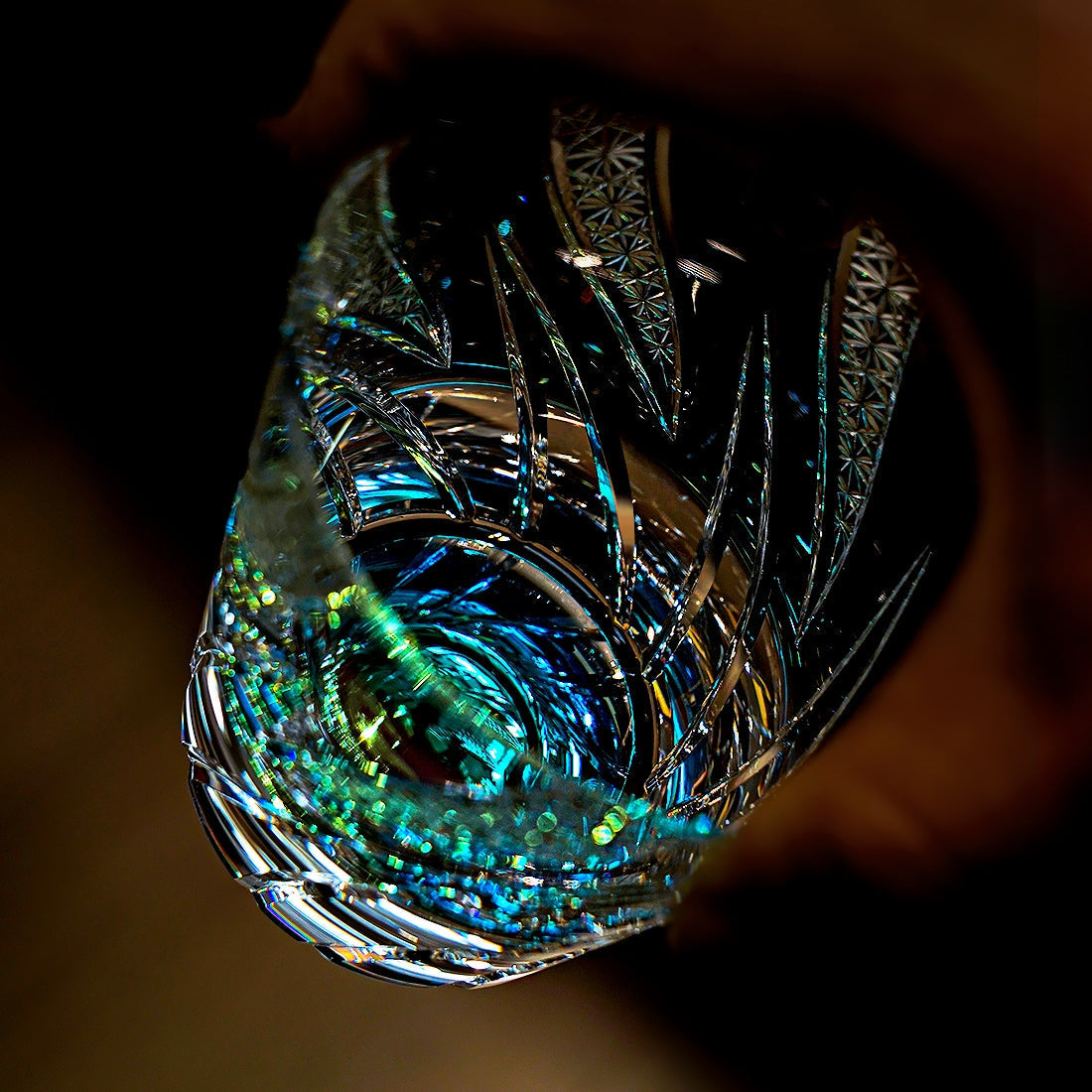
Even the vessel matters. A proper whiskey glass—whether a Glencairn, a snifter, or a simple tumbler with a heavy base—concentrates the aromas and delivers the liquid to the lips in a controlled way. The Edo Kiriko Dragon Whiskey Glass, with its hand-cut blue crystal and Eastern dragon motif, transforms the act of sipping whiskey into something more ceremonial. When the whiskey is smooth and the glass is beautiful, the entire experience becomes more accessible. The vessel does not change the liquid, but it changes how you approach it.
Conclusion
The most approachable whiskies typically share three characteristics: a moderate alcohol content, a flavor profile that leans towards sweetness (rather than smokiness or harsh spiciness), and a reputation for being smooth and easy to drink. Monkey Shoulder, Glenmorangie 12, Maker's Mark, and Gentleman Jack all fit this description and are frequently recommended in guides for whisky beginners. Ultimately, however, the "most approachable" whisky is simply the one that suits you best—the expression that truly aligns with your personal taste. You might start by choosing a whisky known for its smoothness, pouring it into a glass that feels comfortable in your hand, and taking small sips; feel free to add a splash of water to dilute it if you wish. Exploring the world of whisky is not an exam to be passed, but a delightful journey to be savored at your own pace.


Leave a comment
This site is protected by hCaptcha and the hCaptcha Privacy Policy and Terms of Service apply.