
The Edo Kiriko Meiba Glass: Where Craft Becomes Fortune

Holding a Meiba whiskey glass, handcrafted using the Edo Kiriko technique, feels like holding a paradox. It's made of solid crystal, yet it's as light as if it had captured a ray of light. It is serene and profound, while the galloping horses engraved on its surface seem poised for action, never ceasing their movement. This object transcends its function as a drinking vessel, becoming a three-dimensional work of art, a profound interpretation of the virtues it depicts: patience nurturing progress, clarity revealing strength, and exquisite craftsmanship bringing prosperity. It is not merely a glass for holding whiskey, but a vessel carrying a deeper meaning.
I. The Symbol: A Poised Archetype
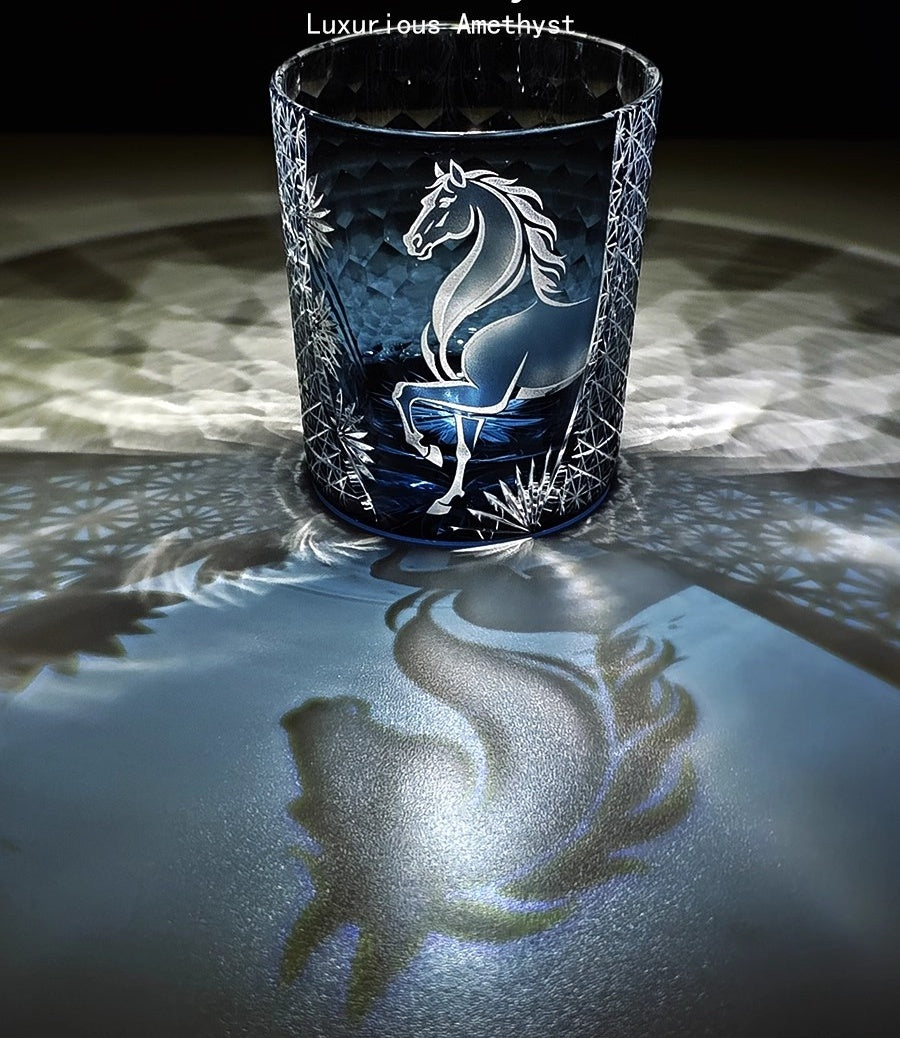
The meiba—the "celebrated horse"—is not rendered in mid-gallop. Its silhouette is collected, head lowered not in submission but in focused readiness. This is the critical genius of its design. In cultures spanning the globe, the horse embodies raw power, journey, and untamed freedom.However, here, the Edo Kiriko masters showcase its most powerful form: the moment before action. It symbolizes not haste, but preparation; not blind speed, but purposeful momentum. In East Asian symbolism, the horse is a clear symbol of success and noble endeavors, and this poised stance embodies the calm confidence that precedes achievement. This glass artwork, through its tactile qualities, reminds us that true progress begins with a calm, resolute, and clear state of mind.

II. The Craft: Light as the Sculptor
Edo Kiriko is an art of revelation through subtraction. Artisans do not add to the crystal; they carve into it, using deep, geometric cuts to liberate light trapped within the glass. In the Meiba Glass, this centuries-old technique performs a specific narrative alchemy.
The horse itself is frosted, giving it a soft, ethereal presence—a form emerging from mist. From this gentle ground, sharp, polished facets are cut with staggering precision, delineating harness, mane, and muscle. These facets are not decorations; they are optical instruments. As light strikes them, it is fractured and channeled, causing the entire frosted silhouette to glow from within.The "brilliant starburst base" described in the text is like a radiant pedestal that guides the light upwards, imbuing the vessel with vitality. This interaction is dynamic and intimate; the glass only comes to life when the drinker holds and rotates the glass in their hand. Therefore, this work of art itself embodies the process it symbolizes: through meticulous carving (cutting) and patient polishing, the latent brilliance (light) is revealed. The galloping horse does not merely exist on the glass; it is conjured from the glass itself.
III. The Choice: Two Philosophies of Fortune
The offering of two colorways—Aoi (Blue) and Kuro (Black)—transforms a single symbol into a dialogue about the nature of strength and luck.
-
The Aoi-Meiba (Blue) is an ode to luminous potential. The serene blue tone acts as a radiant sky or a deep sea, making every cut sparkle with maximum brilliance. Here, the horse is bathed in light—aspirational, clear, and open. This version speaks to fortune as guidance and opportunity, to the optimism of a journey begun under a bright sky. It is the glass for setting intentions, for celebrating vision, and for invoking clarity of purpose.
-
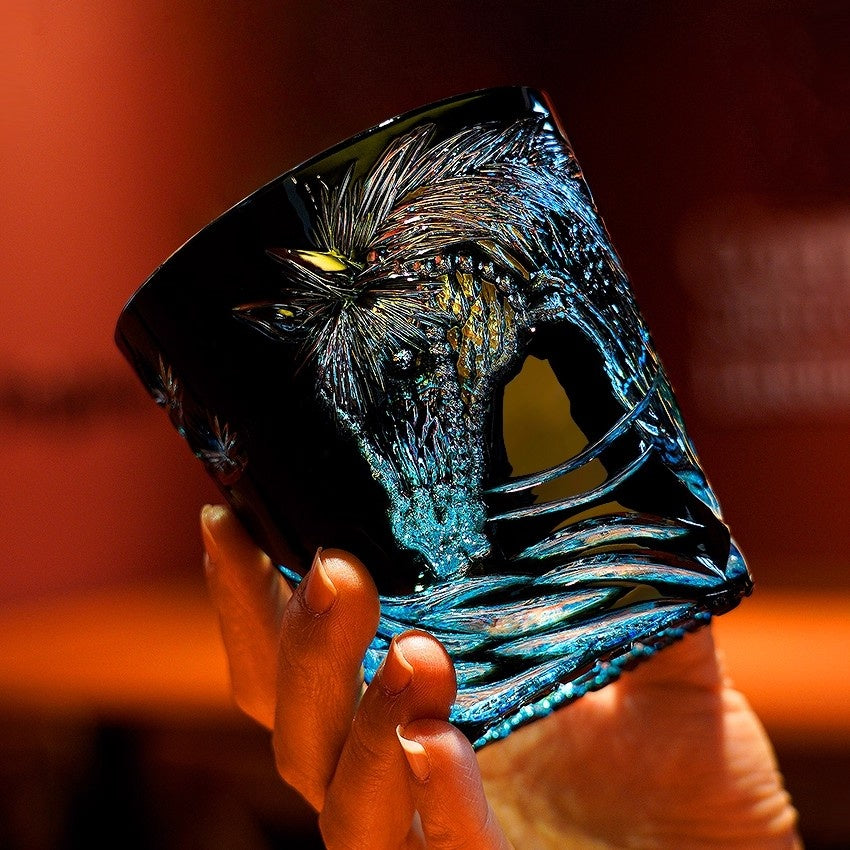
The Kuro-Meiba (Black) It explores the poetry of depth and resilience. The deep black bottle transforms into a field of infinite potential, a void from which all things emerge. Against this dark backdrop, the matte-finished horse appears in a majestic pose, radiating a subtle yet hard-won light. This version embodies inner strength, the power forged through challenges, and the glory of triumphing over adversity. It is a vessel for contemplation, a celebration of unwavering spirit, and a reminder that the greatest strength often originates from the depths of the soul.
IV. The Ritual: A Full Circle of Sensation
A masterpiece of symbolism must also be a masterpiece of function. The Meiba Glass completes its purpose through an impeccable tactile experience. Its weight is balanced—substantial enough to feel valuable, yet never cumbersome. The rim is polished to a silken finish, disappearing against the lips to ensure nothing distracts from the whisky's arrival. This allows the aromas, gathered and concentrated by the glass's form, to be fully appreciated before the first sip.
Thus, the ritual becomes holistic: the eye contemplates the symbol and the dance of light; the hand feels the cool, solid craft; the nose engages with the amplified bouquet; the tongue receives the spirit, pure and elevated. The object facilitates an "opening"—both of the whisky's complex profile and of the drinker's mindful state. It creates a pause, a moment of deliberate appreciation that mirrors the poised readiness of the horse itself.
Conclusion: The Vessel and the Voyage
The Edo Kiriko Handcrafted Meiba Whisky Glass is ultimately a totem for the modern journey. It answers a silent need for objects that carry meaning beyond utility. It does not shout; it illuminates. In its poised horse, it offers a icon of focused ambition. In its play of light and shadow, it reflects the process of revealing one's own potential. In its dual colors, it presents a choice about how to engage with the world—with luminous hope or deep resilience.
Therefore, pouring whiskey into this glass is like initiating a small ritual. It connects a personal moment of rest or celebration with ancient symbols representing progress and good fortune. The fine spirits in the glass may only bring fleeting pleasure, but holding this meticulously crafted object and feeling the craftsmanship embodied within it becomes a lasting reminder: every journey begins with a deep breath, and our greatest strength often lies deep within ourselves, waiting to be awakened and illuminated.


Leave a comment
This site is protected by hCaptcha and the hCaptcha Privacy Policy and Terms of Service apply.