
Is Mino Ware Lead Free?
When choosing ceramic tableware for daily use—especially pieces that hold hot coffee, tea, or soup—one of the most common questions is whether the glaze and decoration are safe. For Mino ware, the short answer is yes: modern Mino ware produced for food-contact use is generally lead-free and must comply with strict Japanese food safety regulations that limit lead and cadmium leaching to extremely low levels. But understanding why this is the case, and how to verify it, requires looking at both the regulatory framework and the specific production practices of Mino kilns.

The Regulatory Context: Japan's Food Sanitation Law
The safety of Japanese ceramic tableware is regulated by the Food Sanitation Act, which establishes maximum permissible limits for the leaching of lead and cadmium from ceramic and glass products intended for food contact. The current standards, revised in 2008 in accordance with the international standard ISO 6486, require a leaching test using a 4% acetic acid solution at room temperature for 24 hours, followed by the determination of leached heavy metal concentrations via atomic absorption spectrometry.
For cups and mugs—the category most relevant to the Hatsuichi Kiyohana collection—the limits are strict: lead leaching must not exceed 2 micrograms per milliliter (2 ppm), and cadmium must not exceed 0.5 micrograms per milliliter (0.5 ppm). These limits apply to all ceramic food-contact products sold in Japan, and Mino ware manufacturers must comply with them before products can be legally sold as tableware.
Why Mino Ware Is Generally Lead-Free
The Japanese ceramics industry made a comprehensive shift toward lead-free products in the 1980s, driven by concerns over lead poisoning that prompted manufacturers to reformulate their glazes and pigments. Modern Japanese ceramic tableware—including Mino-yaki—typically utilizes lead-free glazes. As noted by the Japanese Consumers' Co-operative Union (JCCU), glazes sold by specialty shops and online retailers are lead-free; consumers should look for labels indicating "lead-free glaze" or "lead-free raw materials" when making a purchase.
This shift is particularly relevant for Mino ware because the region's traditional ceramic styles—Shino, Oribe, and others—historically used ash-based glazes and iron pigments, not lead-based formulations. The contemporary Mino ware industry has largely maintained this material tradition while adding modern safety certifications. A ceramic research study found that when Mino ware samples were tested using 4% acetic acid leaching, cadmium and lead were not detected above measurement limits.
Verifying Safety: What to Look For
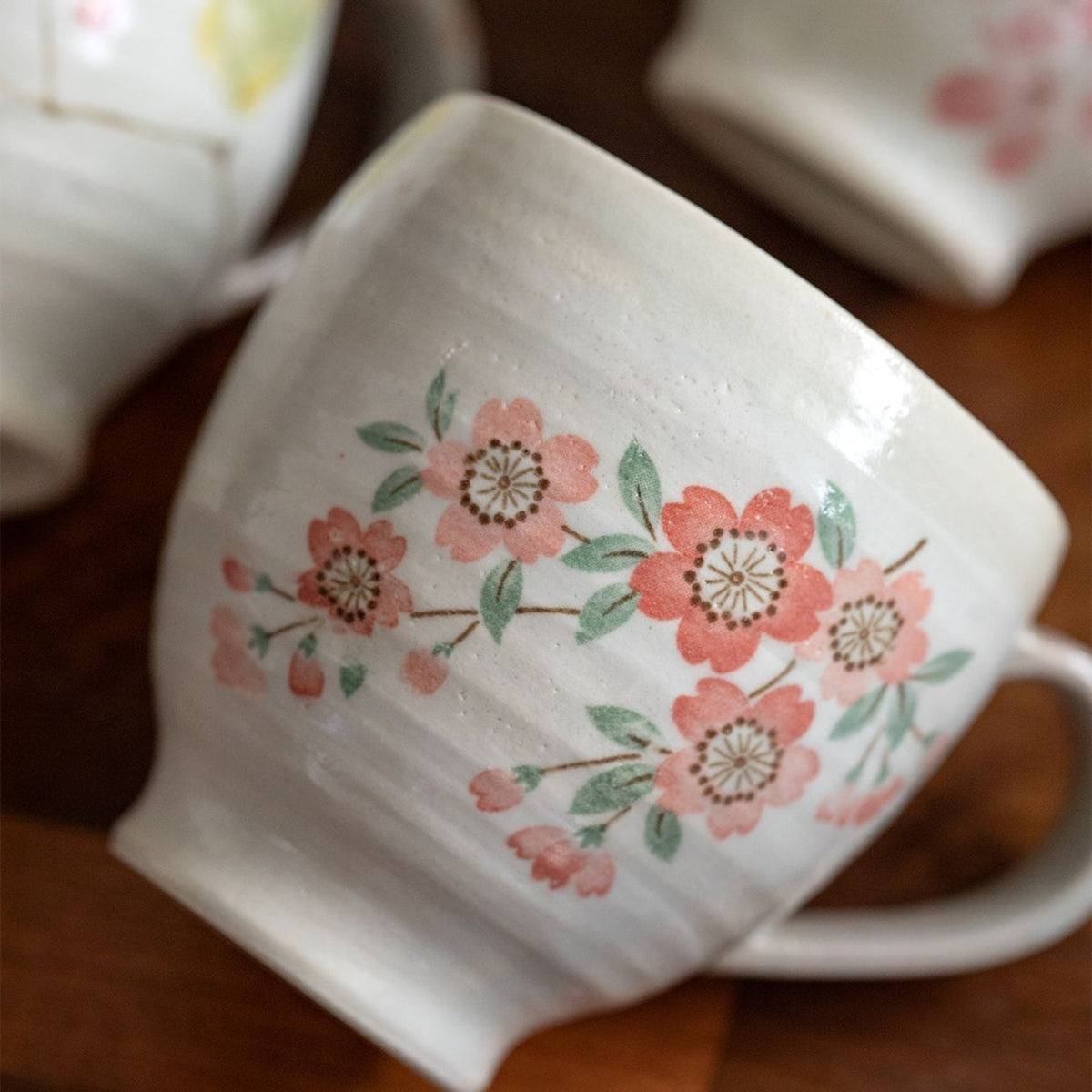
Take the "Hatsuichi Kiyohana" series of mugs as an example; this collection features botanical patterns in soft hues painted over a white glaze, with the decorative pigments being a key feature. Historically, certain metallic pigments—particularly specific red, orange, and gold varieties—were sources of lead leaching; however, in modern Japanese tableware production, these formulations have largely been replaced by lead-free alternatives.
Consumers can verify whether Mino ware products are lead-free and meet food safety standards in several ways. First, products often bear clear labels indicating "lead-free" or "passed lead/cadmium testing." Second, Hatsuichi-branded Mino ware is produced using traditional high-temperature firing techniques, which help stabilize the glaze and minimize the risk of harmful substances leaching. Finally, reputable Mino ware retailers—including those specializing in Hatsuichi ceramics—typically source their products from kilns that comply with the Food Sanitation Act.
The Nuance: "Lead-Free" vs. "No Lead Detected"
It is worth noting that "lead-free" in the context of ceramic tableware can mean slightly different things. Some manufacturers use glazes that contain no lead compounds at all—genuinely lead-free formulations. Others use glazes that may contain trace amounts of lead as an impurity but leach below detectable or regulatory limits. The Food Sanitation Law regulates leaching, not total lead content, because the risk to consumers comes from lead dissolving into food or drink, not from the mere presence of lead in the fired ceramic.
For practical purposes, a piece of Mino ware that passes the Japanese leaching test and carries a lead-free certification is safe for daily use with coffee, tea, and other beverages. The Hatsuichi Kiyohana mugs, with their smooth glazed surfaces and simple painted motifs, fall into this category of compliant, food-safe tableware.
Handcrafted Variation and Safety
The handcrafted nature of Mino ware introduces variations—subtle differences in glaze thickness, painted details, and surface texture—but these variations do not affect safety. The kiln firing process, typically reaching temperatures of 1,200°C or higher for the final glaze firing, vitrifies the glaze and bonds it to the ceramic body, creating a stable, non-reactive surface. The "subtle ceramic variation" and "gentle brush-like details" characteristic of Hatsuichi pieces are aesthetic qualities, not safety concerns.
Conclusion
Mino ware produced in Japan for food contact must meet rigorous safety standards and is typically lead-free. As a modern Mino ware product, the "Hatsuichi Kiyohana" series of hand-painted ceramic mugs complies with the Food Sanitation Act and is safe for serving coffee, tea, milk tea, and other hot beverages. For consumers concerned about lead exposure, the product is clearly labeled "lead-free"; furthermore, it features the high-temperature firing process characteristic of Mino ware and utilizes a minimalist, non-metallic color palette in its design—qualities that offer peace of mind. When purchasing ceramic tableware, the best approach is to buy from reputable retailers and verify compliance with Japanese food safety standards, allowing you to confidently enjoy the warm texture and unique charm of handcrafted Mino ware.

Dejar un comentario
Este sitio está protegido por hCaptcha y se aplican la Política de privacidad de hCaptcha y los Términos del servicio.