

Why is sake served in small glasses?
The Measure of Grace: Why Sake is Served in Small Cups

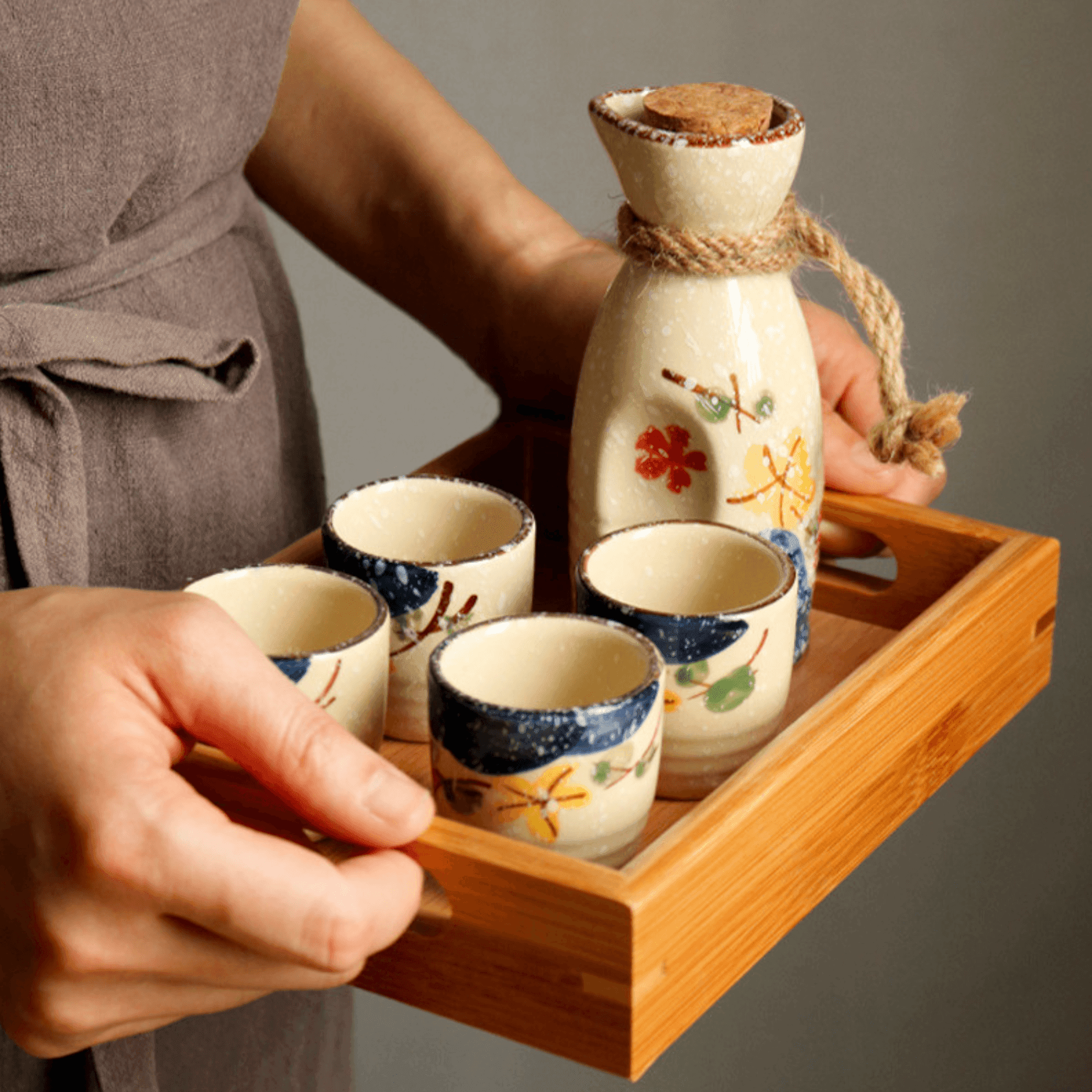
For those unfamiliar with Japanese sake culture, seeing sake served in delicate, thimble-sized cups—whether the porcelain "choko" or the square wooden "masu"—might seem curious, even impractical. Why not pour the sake into a larger, sturdier cup? The answer isn't a single reason, but rather a complex interplay of tradition, sensory experience, social etiquette, and philosophical concepts. Drinking sake from small cups is a deliberate practice that elevates sake from an ordinary alcoholic beverage to a cultural experience, expressing respect for the sake itself, the season, one's companions, and the present moment.

I. A Foundation in Tradition and Practicality
The tradition of small servings is rooted in deep-seated historical and practical necessities. In ancient Japan, ceramic and porcelain were precious. Creating smaller vessels was economically wiser, conserving valuable materials and kiln space. More importantly, sake was historically not the pristine, clear brew we often see today. Early sake was roughly filtered, cloudier, and more susceptible to spoilage, especially without modern temperature control. Small servings ensured the drink was consumed quickly, at its ideal temperature and freshness, before it could degrade in the cup. The small vessel acted as a buffer between the relatively stable storage container (the tokkuri flask) and the open air.
This practicality is also evident in social settings. Sake is an important social lubricant in Japanese culture, and the drinking ritual itself is inherently interactive. The small cups naturally create brief pauses, giving people the opportunity to finish their drink before someone else elegantly refills their cup. This continuous cycle of pouring and receiving (oshaku) is the heartbeat of Japanese communal drinking. It fosters connection, attentiveness, and mutual care. One never pours for oneself; your emptiness is an invitation for another to serve you, and their attentiveness to your cup strengthens social bonds. A large, half-full glass would stall this vital social dance.
II. The Science of the Senses: Temperature, Aroma, and Taste
Beyond traditional factors, small sake cups are also an excellent tool for optimizing the sensory experience. Sake is an extremely delicate beverage, and its flavor changes significantly with variations in serving temperature.
-
Temperature Control: A small cup holds just a few sips. This allows the drinker to finish the sake while it is still at its intended temperature—be it gently warmed (kan) or gracefully chilled (hiyashi or reishu). A larger vessel would allow warmed sake to become tepid or chilled sake to become warm, losing the brewer’s intended expression. The small volume ensures each sip is perfect.
-
Aromatic Concentration: The shape of traditional sake cups, particularly the ochoko or guinomi, is designed to concentrate aromas. As you bring the cup to your lips, the subtle, complex notes—from melon and apple in a delicate daiginjo to earthy rice and umami in a robust junmai—are funneled directly to your nose. This olfactory prelude is integral to the tasting experience. A wide-rimmed glass would allow these delicate esters to dissipate.
-
Palate Pace and Appreciation: Sake is not meant for gulping down. Drinking it in small quantities encourages mindful appreciation. This allows you to fully experience the evolving flavors of sake on your palate—the initial impact (iki), the gradually unfolding body (mi), and the lingering finish (ato-nigashi). This gradual tasting method prevents palate fatigue and allows you to truly appreciate the complex layers of sake, just like savoring a fine whiskey or wine.
III. The Vessel Itself: An Expression of Season and Craft
A small sake cup is far more than just a container for holding sake; it is an integral part of the aesthetic experience. The choice of sake cup varies with the seasons, the type of sake, and the occasion, reflecting the Japanese principle of living in harmony with nature (a sense of seasonality).
-
Porcelain Ochoko: The most common small cup, often with a blue decorative pattern. Cool to the touch, it is ideal for chilled sake in spring and summer, its clean lines complementing the refreshing taste.
-
Wooden Masu: Originally a square box used for measuring rice, the masu evokes history and earthiness. It is often used for celebratory occasions or with fresh, lively sake. Sometimes, a glass ochoko is placed inside, and the sake is poured until it overflows into the masu, a symbolic gesture of abundance and generosity.
-
Earthenware Guinomi and Choko: These cups are typically heavy, with thick walls and a rustic, handcrafted glaze. Their textured surface and substantial weight feel very solid in the hand. They are perfect for drinking warm sake during the autumn and winter months, as the earthenware has excellent heat retention properties. Each unique cup embodies the craftsman's dedication, adding a personalized touch to the drinking experience.
-
Modern Glassware: Nowadays, high-quality sake is increasingly served in specialized glasses, such as white wine glasses or sherry glasses. While these glasses are larger than traditional sake cups (ochoko), they are still relatively small compared to water glasses. Connoisseurs use these glasses to maximize the aroma of fragrant sakes like ginjo and junmai daiginjo, demonstrating that the principle of "small sips, focused appreciation" remains relevant even with the aid of modern tools.
This seasonal and stylistic rotation of vessels keeps the experience fresh and engaging, inviting the drinker to appreciate the sight and feel of the cup as much as its contents.
IV. Philosophical Underpinnings: Modesty, Mindfulness, and Transience
At its heart, the practice touches on core Japanese philosophies. The small cup embodies modesty and sufficiency (hodo-hodo). It represents the idea of having just enough, of finding contentment in a small, perfect portion rather than excessive abundance. It discourages waste and encourages gratitude for what is given.
It also enforces mindfulness (ichigo-ichie)—the concept of treasuring the unrepeatable nature of a moment. Each small cup represents a single, fleeting moment of taste, aroma, and companionship. Once gone, it is gone; the next pour, even from the same bottle, will be a slightly different experience, consumed in a different moment. The ritual keeps you present.
Finally, it echoes the aesthetic of transience (wabi-sabi). The ceremony was simple, imperfect, and incomplete. There were no wine cups, the wine flask was empty; there was no sake, the wine cups were empty; and without someone to share it with, the sake would be meaningless anyway. This small, unassuming vessel played its temporary role in this beautiful yet fleeting moment.
Conclusion: The Cup as a Universe
Therefore, the small sake cup is by no means a product of whim or historical accident. It is a meticulously designed vessel—a crucible that blends science, art, and philosophy. It is a practical tool for controlling temperature and aroma, a canvas for showcasing the beauty of the seasons, a medium for fostering social harmony, and a teacher that instructs us to savor with mindfulness. Holding a sake cup is like holding a universe brimming with rich cultural significance. It reminds us that true abundance lies not in how much we possess, but in how much care and attention we invest in appreciating every subtle and beautiful moment that life offers, and in savoring every sip of sake. So, the next time you are served sake in a small vessel, please receive it with both hands, sip slowly, and appreciate the profound cultural wisdom contained within this seemingly simple and unpretentious vessel.


Dejar un comentario
Este sitio está protegido por hCaptcha y se aplican la Política de privacidad de hCaptcha y los Términos del servicio.