

What is a sake glass set called?

The Naming of Elegance: What is a Sake Glass Set Called?
In the world of fine beverages, the glass is far more than just a container; it's an integral part of the ritual, shaping the sensory experience and signifying the prestige of the liquid it holds. For wine, we use stemmed glasses and flute glasses; for whisky, we use flat-bottomed glasses and Glencairn glasses. However, when we delve into the tranquil and subtle realm of sake—Japan's national drink—the terminology becomes exceptionally refined, rooted in centuries of tradition and aesthetic ideals. So, what should a set of sake glasses be called? The answer isn't a simple word, but a carefully crafted vocabulary that reveals the profound connection between form, function, and art in Japanese culture. There isn't a single, universal phrase in English, such as "sake glass set."Instead, one enters the world of sake vessels or sake ware, where each piece has a distinct name, purpose, and story.

The Philosophy of Vessels: Why the Vessel Matters
To understand the naming rules of sake, one must first understand why sake vessels are so important in sake culture. Unlike spirits, which emphasize heavy glasses, or wine, which relies on temperature-sensitive bowls, sake is enjoyed in a highly flexible and varied way. Sake can be served chilled (reisho), at room temperature (shokushu), or warm (teishu), and the ideal drinking vessel changes accordingly. The material of the vessel—whether porous clay, translucent porcelain, crystal-clear glass, or fragrant cedar wood—interacts with the sake, subtly influencing its temperature, aroma, and even taste. Choosing the right vessel is the first step in a sommelier's skill, aimed at showcasing the unique personality of the sake. Therefore, a "set" of sake is less about the unity of a set of vessels and more about having the right tools to satisfy various drinking experiences.
The Canon of Vessels: A Glossary of Grace
Here, we explore the key players in the sake vessel repertoire, moving from the most traditional to the modern.
1. The Ochoko and Choko (お猪口 / 猪口): The Quintessential Pair
These are the small, cylindrical cups most foreigners immediately associate with sake. Typically holding 30 to 90 milliliters, they are designed for communal, social drinking. The slightly larger version is often called ochoko, while choko can denote a smaller size. They are usually part of a set with a tokkuri (see below). Made from ceramic, porcelain, or lacquerware, their small size encourages frequent refills, embodying the cultural practice of oshaku (pouring for others), which fosters connection and attentiveness within a group.
2. The Tokkuri (徳利) or Sakazuki (盃): The Flask
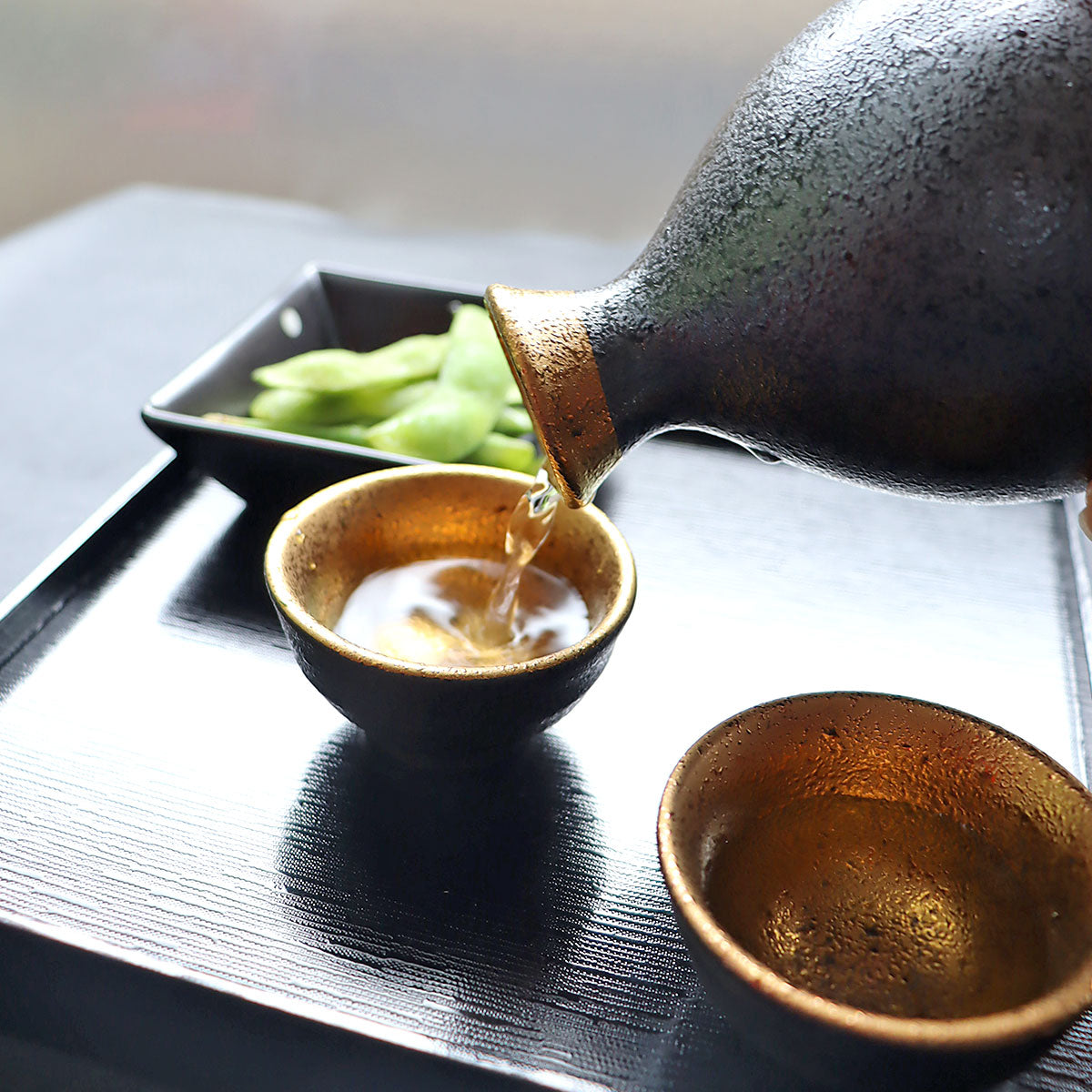
The tokkuri is the iconic flask, often with a narrow neck and a rounded body, used for warming and pouring sake. When served warm, sake is heated in the tokkuri, which is then brought to the table. Its shape minimizes surface area, helping to retain heat and aroma. In a traditional setting, you would order a tokkuri of sake and receive one or more ochoko. Together, this tokkuri and ochoko combination is the classic serving set for warm or room-temperature sake in casual izakayas (pubs) or homes.
3. The Sakazuki (盃): The Ceremonial Flat Cup
This is a wider, shallower, saucer-shaped sake cup, historically used in Shinto ceremonies, weddings (San-san wedding banquets), and formal celebrations. Its wide surface better showcases the aroma of sake, making it suitable for enjoying precious, usually high-quality sake on celebratory occasions. Although sake cups are not usually part of an everyday "sake set," a pair or set of sake cups (sakazuki) is the most formal sake utensil.
4. The Guinomi (ぐい吞み / ぐい飲み): The Substantial Solo Cup
Meaning "gulp cup" or "swig cup," the guinomi is a larger, more substantial cup than the ochoko, often holding 120 to 180 ml. It is designed for the solitary, contemplative enjoyment of premium sake, much like a whisky glass. Its thicker walls and heftier feel are satisfying to hold, and its wider bowl allows the drinker to fully appreciate the sake’s aroma and color. An enthusiast might have a collection of unique guinomi, each chosen to match a specific type of sake or personal mood.
5. The Masu (枡): The Wooden Measure Box
Originally a square wooden box used in feudal Japan to measure rice (and later sake), the masu has evolved into a distinctive and nostalgic sake vessel. During festivals or special restaurant occasions, sake is poured into the masu, sometimes with a small sake cup (sakazuki) placed inside, allowing the sake to overflow, symbolizing abundance and generosity. Drinking sake from a masu imparts a subtle and pleasant aroma of cedar wood.
6. The Modern Sake Glass (ワイングラス): The Aromatic Revelator
The most significant modern evolution is the adoption of stemware—essentially, white wine glasses. Pioneered by brewers and sommeliers (kikisakeshi), this practice revolutionized premium sake tasting. A tulip-shaped wine glass, with its narrow rim and rounded bowl, concentrates the often-delicate, fruity, and floral aromas of a ginjo or daiginjo sake, which can be lost in a small ochoko. This vessel treats sake with the same analytical reverence as fine wine, highlighting its complexity. In high-end sake bars, you will rarely receive a tokkuri and ochoko for a premium bottle; instead, it will be poured into a graceful glass.
What, Then, is a "Set"?
In a traditional Japanese household, a sake set might practically refer to a matching tokkuri and two or more ochoko, often sold together in a decorative box. This is the equivalent of a "dinnerware set" for sake.
For the contemporary connoisseur, however, a "set" is more conceptual—a curated collection of vessels for different purposes: a pair of wine glasses for aromatic daiginjo, a few artisan guinomi for rich junmai, a tokkuri and ochoko for warm honjozo on a cold night, and perhaps a masu for celebration. Retailers might sell these as "tasting sets" featuring, for example, four different shaped glasses to compare how the same sake transforms in each.
The Material World: Clay, Glass, and Beyond
The material is a language in itself:
-
Porcelain & Ceramic: The most common, neutral, preserving the sake’s true character. Sometsuke (blue and white) porcelain is classic.
-
Glass: Showcases clarity and color; essential for modern appreciation.
-
Clay (Shigaraki, Banko, Mino): Unglazed or partly glazed, these porous cups can subtly soften and round the flavor of sake, changing with use over time.
-
Lacquerware: Lightweight, elegant, and warm to the touch, often used for sakazuki.
-
Metal (Tin, Silver): Excellent for chilling, as it conducts temperature rapidly.
Conclusion: The Vessel as a Guide
Ultimately, to ask for the name of a sake glass set is to ask how one plans to converse with the sake. The lexicon—ochoko, tokkuri, guinomi, glass—offers different dialects for that conversation. The traditional set of tokkuri and ochoko speaks the language of warmth, sharing, and conviviality. The solitary guinomi speaks of personal reflection and earthy connection. The modern stemware speaks the precise, analytical language of aromatic discovery.
Therefore, the true answer to the question, "What is it called?" is not a simple word, but an invitation: to regard these vessels as essential guides on a journey to explore the soul of sake. The most complete "set" lies in understanding; from the simplest pig-snout cup to the most exquisite crystal glass, each cup is a key, unlocking different chapters in the vast hall of sake. Choosing vessels is choosing your tasting path, paying homage to the artistry of the sake brewer in a way that the drinker carefully selects.


Laisser un commentaire
Ce site est protégé par hCaptcha, et la Politique de confidentialité et les Conditions de service de hCaptcha s’appliquent.