






The Eye of the Wind Whisky Glass - K9 Optical Crystal Glass
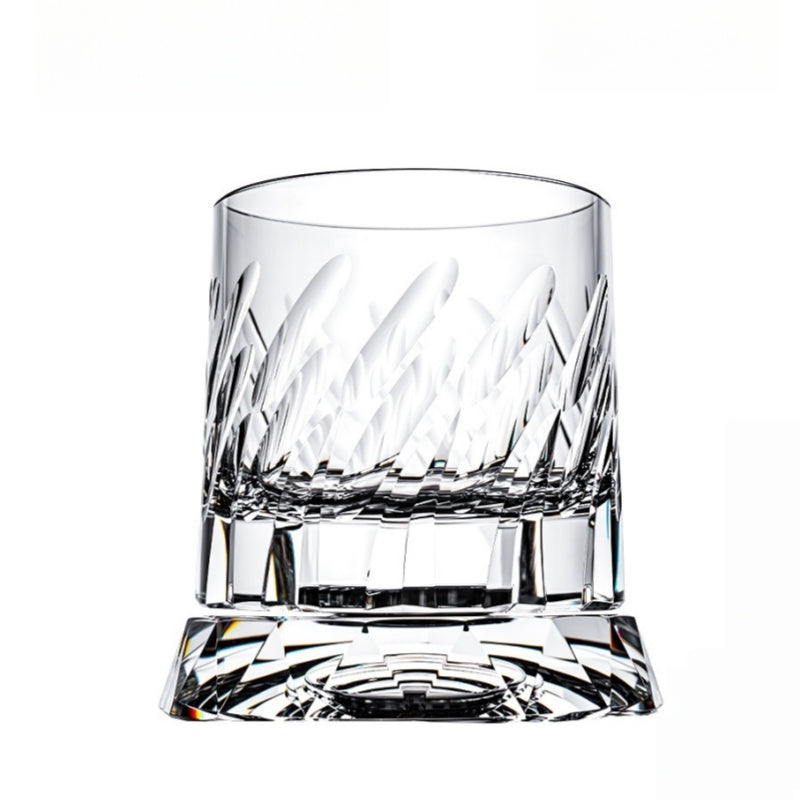
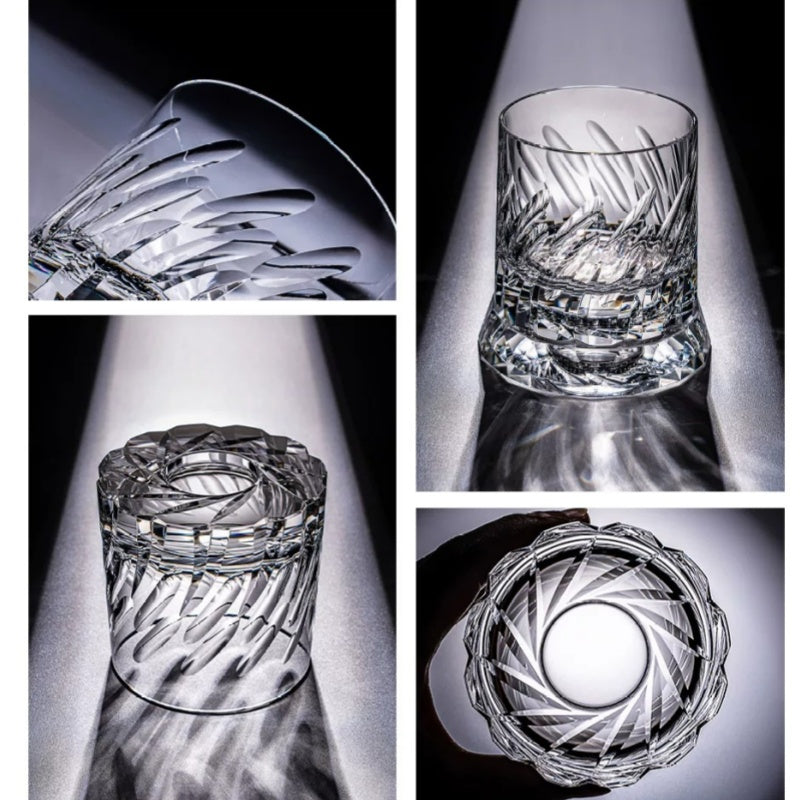
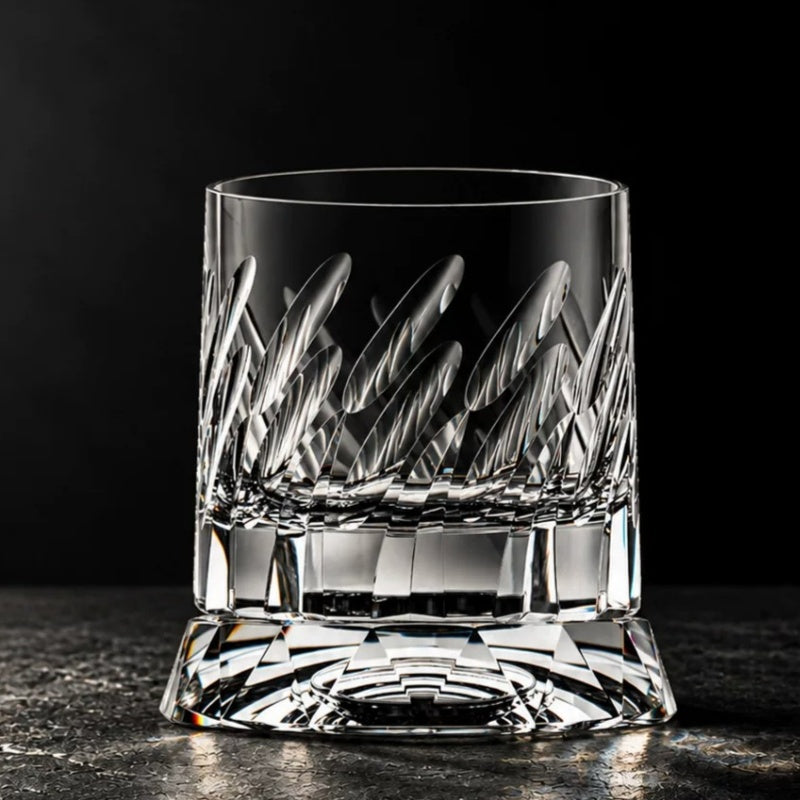
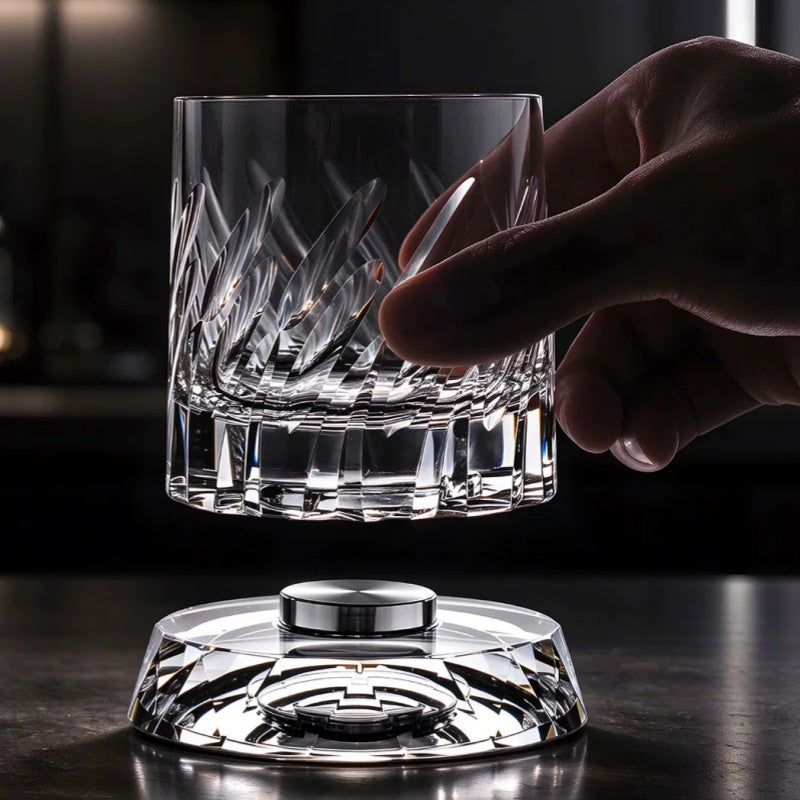
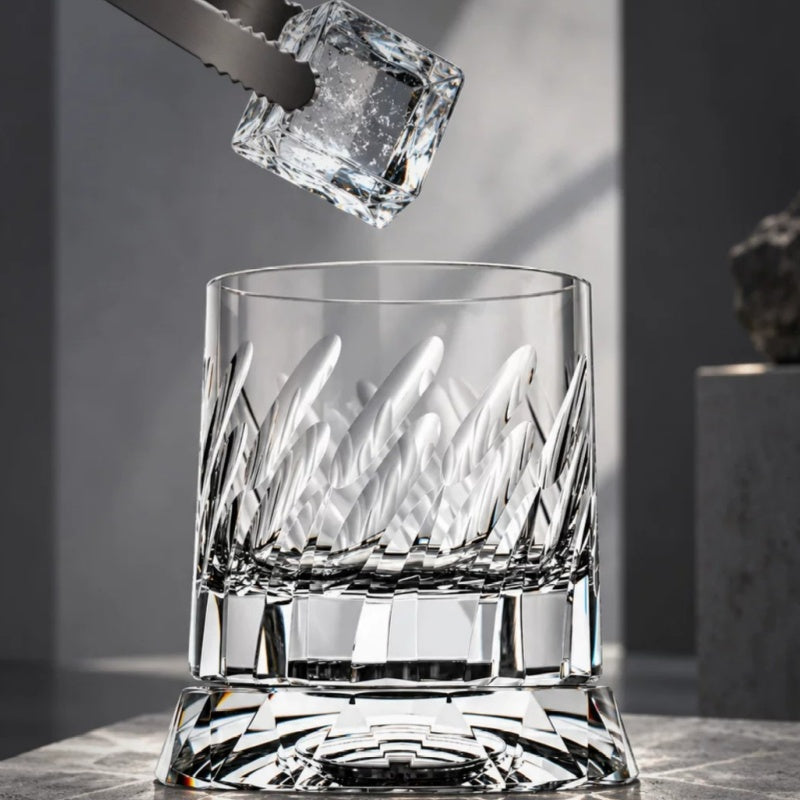
The Eye of the Wind Whisky Glass fixes a hand-cut vortex into optical crystal, framed by dense fields of engraved facets that gather and scatter the light of the room. Through deep relief cutting and layered engraving, the surface reveals shifting depth and a sculptural presence that changes with every angle: one moment a still spiral, the next a body in motion. Nothing here is pressed or printed. The vortex emerges from the glass itself through precision cutting and repeated hand polishing.
Each piece is made through a demanding handcraft process of roughly fifty minutes of engraving at the wheel and a further thirty-eight minutes of polishing and washing, with every stage completed entirely by hand. Output is limited by the number of people who can cut to this standard rather than by machines, and no detail is removed to lower the cost of a piece.
Balanced in weight at 13.7 ounces (388 g) and finished with a smooth rim, the glass lets whisky and aged spirits open naturally while sitting steadily in the hand; its 8.5 fl oz (250 ml) bowl leaves room for a two-ounce pour and a single large cube. The pattern carries its own intent: the eye of the wind is the still point at the center of movement, and in turning, the piece becomes a reminder that composure and momentum are the same discipline.
Set down near a window or under a single lamp, the cut walls cast a caustic of hard-edged ripples across the table, the signature of clean K9 optical crystal with almost nothing inside to soften the beam. The glass rests on a 3.94 in (10 cm) mirror-polished base of its own; raise it, spin it lightly, and the whisky becomes a whirlpool, light climbing the facets before it travels across the table and settles.
Selected for its harmony between form, discipline, and restraint, it reflects the values KORNSUR looks for in objects meant to be appreciated over time — an exceptionally clear vessel, an intricate hand-cut surface, and a quiet idea of movement held in stillness.
Presented in a single-glass gift box with its base, The Eye of the Wind is suited for collectors, milestones, and the kind of evening that calls for something truly singular.
• Material:
K9 optical crystal glass, Mohs hardness 5.5–6.0
• Capacity:
8.5 fl oz (250 ml) · Weight: 13.7 oz (388 g) glass, approx. 24.8 oz (703 g) with base
• Dimensions:
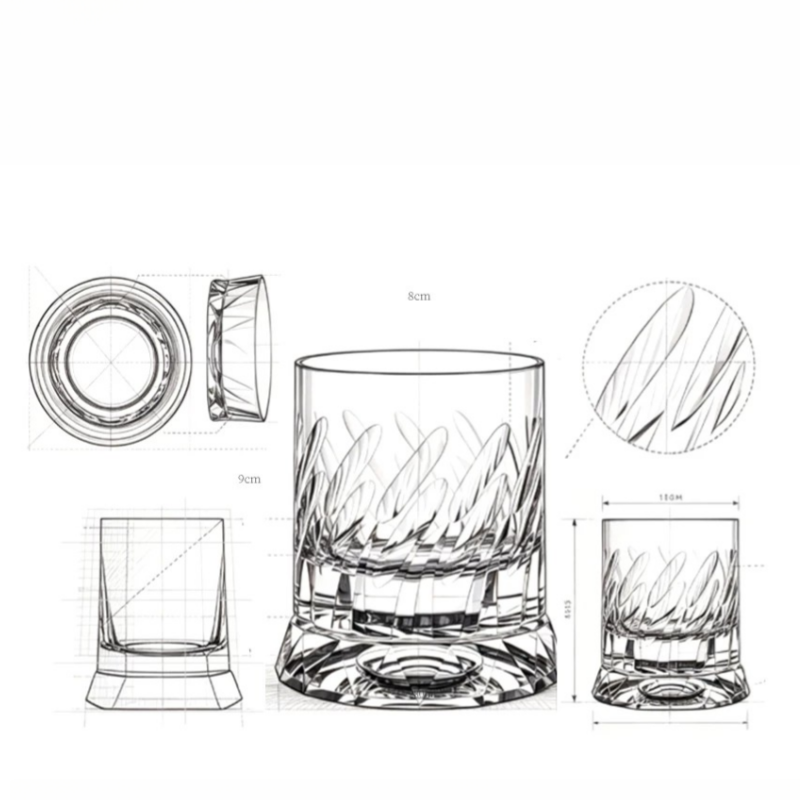
rim dia. 3.15 in (8 cm), glass height 3.15 in (8 cm), total height 4.13 in (10.5 cm), foot dia. 3.35 in (8.5 cm), base dia. 3.94 in (10 cm)
• Product:
1x Whisky Glass, 1x Rotating Base, 1x Gift Box
Specifications
Product Care
MAIN TAINING
HAND WASH
To prevent damage to items, it is recommended to clean them individually using warm water and non-abrasive cleaning products. We recommend setting your dishwasher on gentle mode or washing gently by hand.
DRY AND WIPE
Place the glass on a towel or absorbent kitchen paper and blot it dry, or wipe it carefully while holding the body with your thumbs to reduce pressure. Use lint-free fine cotton or linen towels. Put the cups back into the box or stand them upright without touching each other.
STORAGE and PRESERVATION
The edges of handmade crystal wine bottles are very thin, so they should be placed in a cupboard or packaging box with the cup mouth facing upward to prevent the cup mouths from touching each other. Do not stack wine bottles or hang them with hooks to avoid cracking the handles. Wine bottles should be stored in a clean and tidy place, with the mouth of the cup facing up and the cap open for ventilation.
MAINTENANCE
Do not leave wine in the bottle. Please clean it in time after use. The decanter must be cleaned with a soft sponge in warm water. Do not use detergent. If fog appears, pour some coarse salt and half a liter of alcohol. Shake vigorously and rinse with warm water several times. Insert absorbent kitchen paper into the cup for about 10 hours to absorb residual moisture.
The crystal glass material is purely hand-blown. Occasionally small bubbles and small scratches are normal phenomena. The crystal material is not resistant to high temperatures and cannot be heated and steamed. It is not suitable for boiling water to be poured directly into it. It is only suitable for daily tea temperatures below 50~60℃.
Optionen auswählen

Design
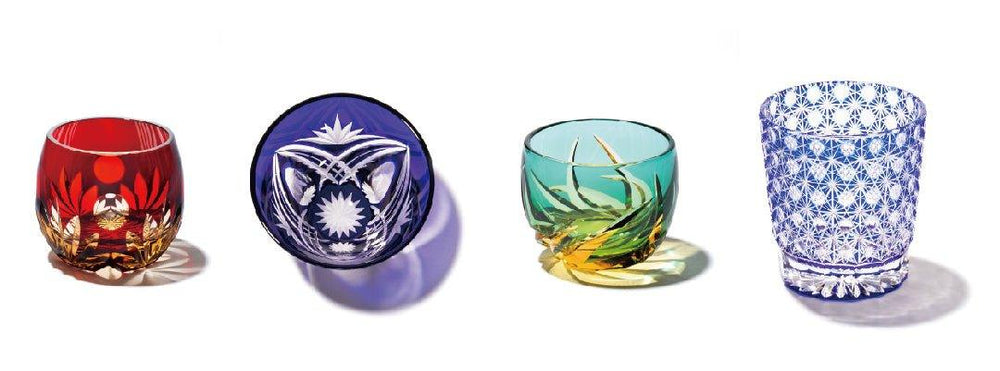
Crafting Of Edo Kiriko
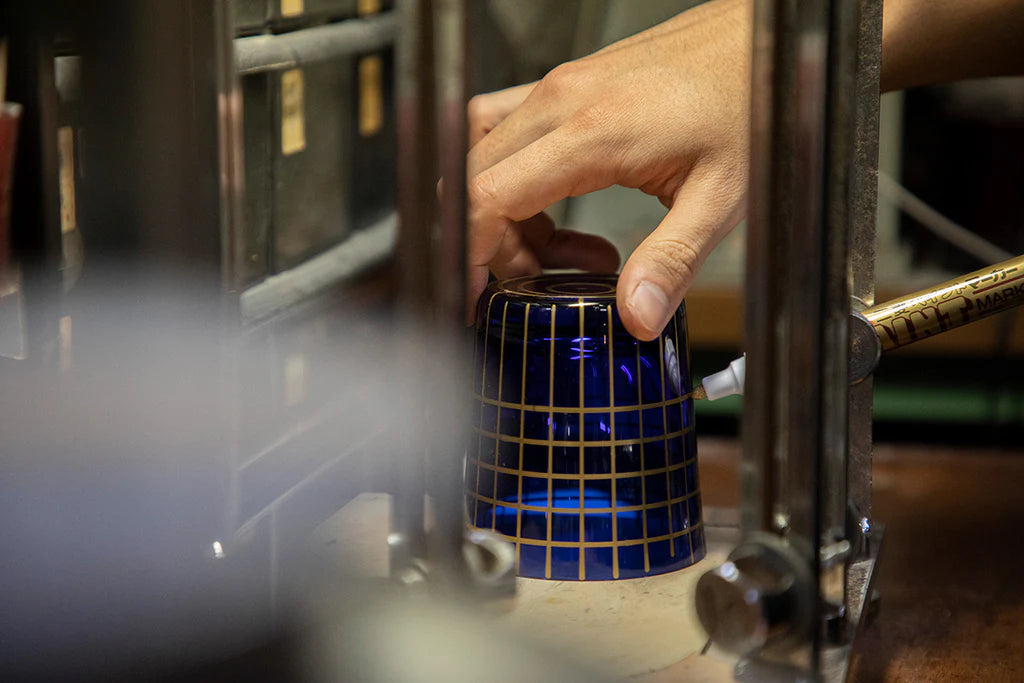
The artist marks simple grid lines on the glass without drawing a design to provide the plan's framework. The design grid is drawn on the glass's surface using a bamboo stick or brush with red iron oxide. Next, the baselines of the design are lightly etched using a whetstone. Relying on these fine marks and lines, the delicate patterns of Edo kiriko are created with the artisan's expertise and skills.
First Cut
The base design is cut to about three-quarters of the final width and depth. The surface of the glass is cut using a sand paste-coated metal disc rotating at high speed. Generally, emery powder with many abrasive particles is used to create the sand paste. The clear pattern border lines and the irregular patterns are cut little by little. The balance between the thickness and depth of the cut lines relies upon the artisan's years of experience, as there are no detailed sketches.

Adjustments
The patterns cut in the second stage are adjusted, and the surface is smoothly polished in this process. A whetstone disc, natural or artificial, is used to cut delicate patterns which cannot be created with the metal disc used in the prior process. This is the last cutting stage to complete the designs, so careful work is required not to leave any powder residue and to ensure a brilliant finish.

Polishing
This is the final stage of production, and it is usually carried out on soda-lime glass (most prevalent type of glass). The opaque surface left by the third stage is returned once more to its original transparent state, with the attractive shine and sparkle typical of Edo kiriko. Chemical processing with hydrofluoric acid is also applied for high-class crystal glass. Depending on the piece, a variety of different polishing discs are used, such as paulownia wood discs, willow wood discs, hair brush discs, and belt discs. The final work is polished by applying water and polishing powders to obtain a glittering finish, while fine sections are polished with a cloth or a brush. To complete the final polishing, a cloth buffing disc is used to bring out the sparkle and shine of the cut glass.