
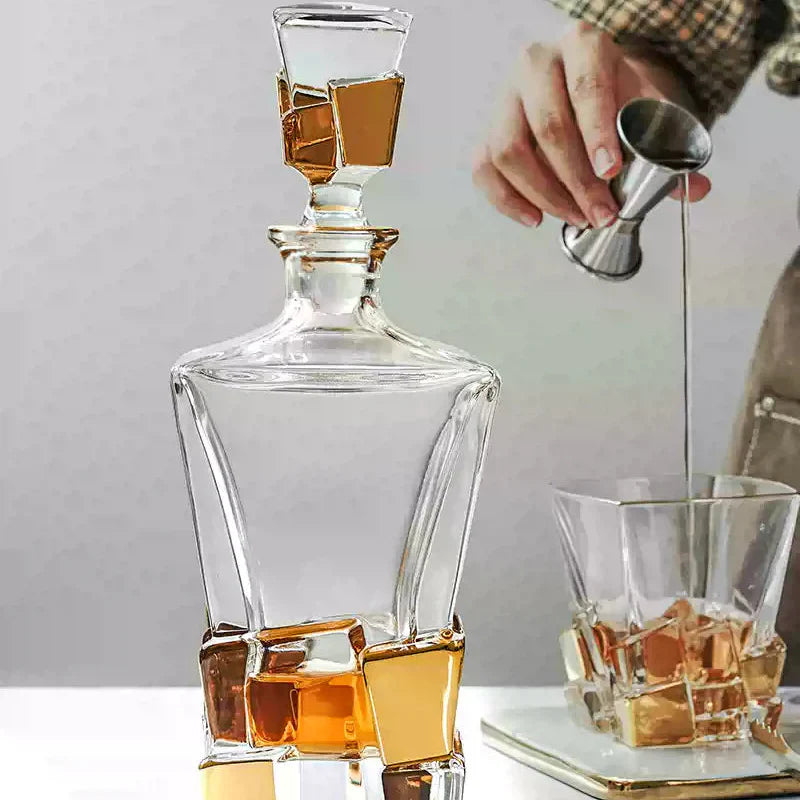
What is the purpose of a decanter?

At first glance, the question seems almost too simple. What, exactly, is the purpose of a decanter? The obvious answer—to hold liquid—merely scratches the surface. A bucket holds water; a milk jug holds milk. But a decanter holds something far more subtle: it holds time, anticipation, and the promise of transformation. To truly understand the decanter, one must recognize that some vessels do not merely contain the liquids poured into them; rather, they endow those liquids with a sense of completion and transcendence.
For centuries, the decanter has occupied a unique place within the material culture surrounding the consumption of alcohol. It is neither strictly indispensable nor purely decorative; its enduring longevity across diverse civilizations and eras stems precisely from its dual function—serving as both a practical tool and a poetic object. From the wine cellars of Georgian England to the whiskey display shelves of contemporary Tokyo, the decanter has persisted as an artifact that seamlessly blends utility, aesthetics, and ritual. This essay aims to explore the myriad functions of the decanter—some obvious, others subtle—for it is the sum of these purposes that constitutes the source of its enduring allure.
The Practical Purpose: Separation and Purification
The oldest and most fundamental purpose of the decanter is separation. Long before wine was the clear, filtered liquid we know today, it arrived at the table carrying sediment—grape skins, seeds, tartrates, and the lees of fermentation. To pour directly from the storage vessel was to serve a cloudy, gritty drink. The decanter solved this problem through the simple but elegant process of decantation: the slow, careful pouring of liquid from one vessel to another, leaving the sediment behind.
Even today, aged wines still develop sediment. A bottle of mature Bordeaux or Barolo—having undergone decades of bottle aging—will form a layer of pigmented sediment along the walls of the bottle, composed of tannins and tartrates. If poured directly into a glass, these deposits become suspended in the liquid, rendering the wine cloudy and imparting an unpleasant bitterness.
The same principle applies to certain unfiltered spirits and traditional sakes, which naturally develop sediment over time. A decanter acts as a gateway, allowing the flavors to be preserved while simultaneously eliminating impurities.
The Aerating Purpose: Awakening the Liquid
If separation is the decanter’s oldest purpose, aeration is its most celebrated. When a wine, whiskey, or spirit is exposed to air, a cascade of chemical reactions begins. Oxygen interacts with tannins, softening their astringency. Volatile compounds—both aromatic and unpleasant—evaporate at different rates. The liquid essentially "breathes," shedding the reductive notes of long confinement and revealing the aromatic complexity that bottle aging has created.
A decanter can dramatically accelerate this process. A bottle of young, tannic red wine, if left merely to rest in a glass, often requires several hours to fully "awaken"; however, when placed in a decanter with a broad surface area, it can achieve the same evolutionary effect in just thirty minutes. In this process, the shape of the decanter is paramount. Decanters with a wide base and a full body maximize the liquid's contact area with the air, while those with a tapered neck help minimize continued oxidation after the wine has been poured. Furthermore, some decanters are specifically designed for "hyperdecanting"—an intensive aeration method achieved through vigorous shaking or even brief stirring.
For whiskey, aeration (or decanting), while serving a different purpose, is equally crucial. High-proof spirits, immediately upon being poured into a glass, often emit a pungent aroma of ethanol that tends to mask the more delicate fragrances within the liquid. Allowing the spirit to rest in a decanter for a brief period—even if only for a few minutes—allows some of the volatile alcoholic fumes to dissipate, thereby revealing the deeper, underlying notes of vanilla, spice, fruit, and wood. Today, a growing number of connoisseurs of single malt Scotch and Japanese whiskies have reached a consensus: far from compromising the flavor, decanting actually serves to truly liberate and elevate the spirit's character.
The Serving Purpose: Grace at the Table
Beyond its chemical function, the decanter holds profound social significance. It transforms the act of pouring wine from a simple daily chore into a ritualistic experience. Consider the difference between placing a wine bottle on the dining table versus a crystal decanter: the bottle conveys information regarding commerce and storage, whereas the decanter communicates hospitality and the significance of a special occasion.
The manner in which wine is poured from a decanter differs markedly from that of a standard bottle. Its spout is designed to ensure a clean, drip-free pour. The decanter’s handle—should it be equipped with one—provides both control and stability. Furthermore, the decanter’s shape is ergonomically designed—a feature that most cylindrical wine bottles simply cannot match. These ergonomic attributes prove crucial when entertaining guests, navigating the dining table, and maintaining uninterrupted conversation.
Moreover, using a decanter allows the host to serve wine without displaying the label. This may seem like a trivial detail, yet it carries genuine significance. Removing the bottle means stripping away the price, vintage, producer, and all the symbolism associated with branding and status. The wine or spirit is presented on its own merits—judged solely by its taste and aroma, unencumbered by any preconceived notions or biases. When decanted, even an ordinary wine can offer a delightful surprise; a fine vintage, meanwhile, becomes an intoxicating pleasure—one that delights the senses without ever feeling intimidating.
The Visual Purpose: Light and Liquid in Dialogue
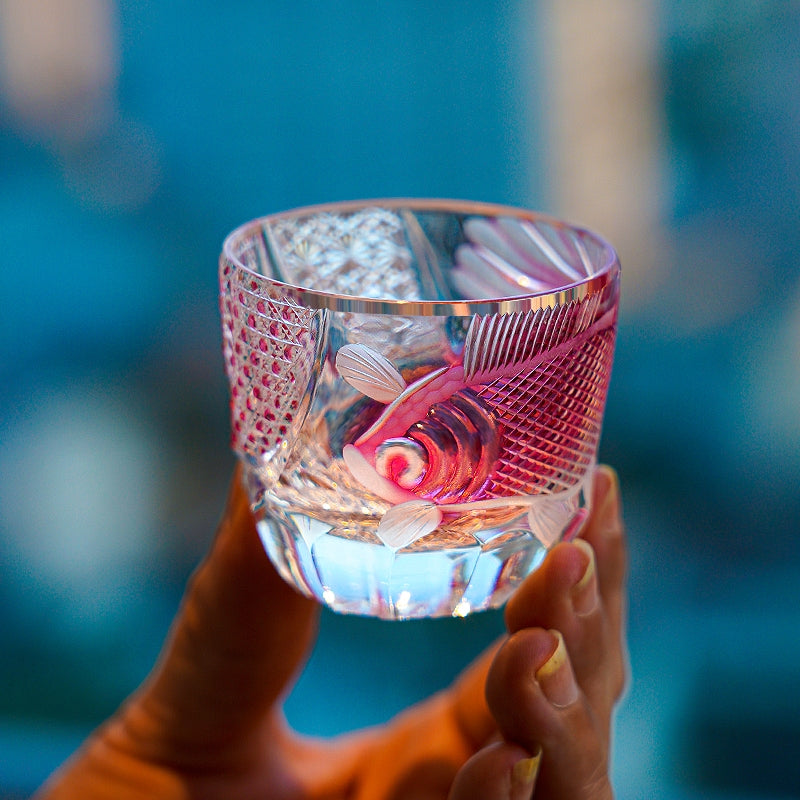
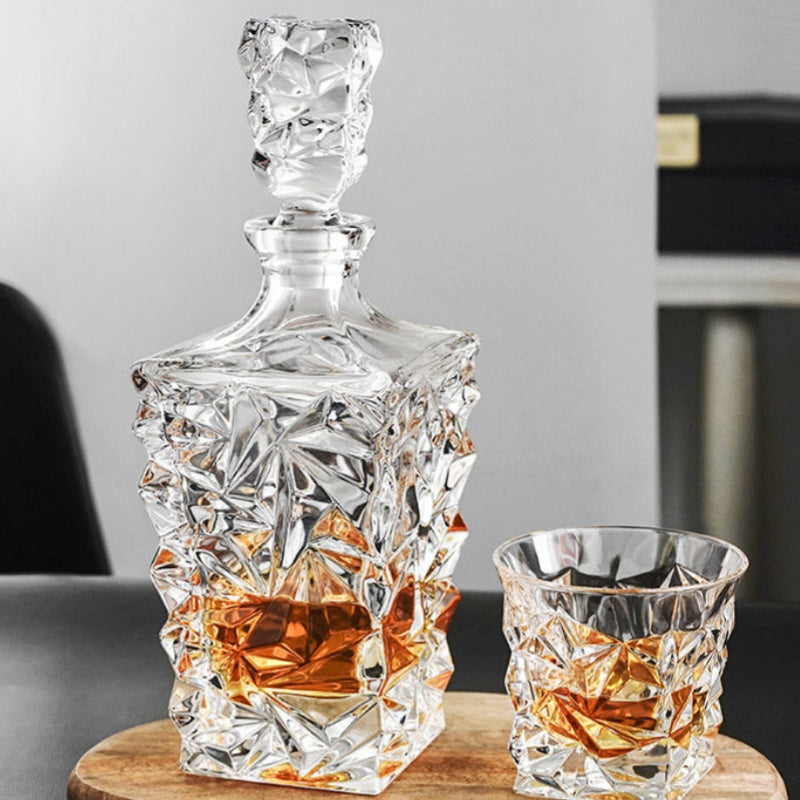
Perhaps the most immediately apparent purpose of the decanter is visual. A beautifully crafted decanter—particularly one made from lead crystal or fine Edo Kiriko glass—turns the serving of drink into a spectacle of light and color. The decanter does not merely hold the liquid; it frames it, magnifies it, transforms it.
When light passes through cut crystal, it refracts and disperses, creating the rainbow flashes that collectors prize. When that same light then passes through wine or whiskey, it illuminates the liquid's true color—the ruby depths of a young Burgundy, the amber glow of a twenty-year-old single malt, the pale gold of a aged Sauternes. The decanter becomes a lens, revealing what the opaque bottle concealed.
This visual purpose extends to the table setting itself. A decanter is an object of presence—substantial, reflective, often sculptural. Even empty, a fine decanter commands attention. It speaks of care, of preparation, of the host's commitment to beauty as well as hospitality. In the context of a formal dinner or a private tasting, the decanter is not an accessory but a participant.
The Preservation Purpose: Guardianship of Leftovers
A less discussed but equally practical purpose of the decanter is short-term preservation. While no decanter can stop the eventual oxidation that degrades wine and spirits, certain designs slow it significantly. Decanters with tight-fitting stoppers—particularly those with ground glass seals—create a barrier against continuous air exchange. For a wine that will be consumed over two or three days, or a whiskey enjoyed over several weeks, a stoppered decanter is vastly superior to an open bottle.
Specialized preservation decanters go further, incorporating floating stoppers that rest directly on the liquid's surface, eliminating air contact altogether, or inert gas infusion systems that displace oxygen before sealing. These advanced decanters serve a specific audience: collectors who wish to enjoy fine wines without finishing the bottle in a single evening, or spirits enthusiasts who maintain a rotating selection of open bottles.
For most home use, however, a simple glass stopper provides sufficient protection for the week or two between pours. The decanter thus serves as both server and guardian—presenting the liquid at its best, then protecting it until the next occasion.
The Ritual Purpose: The Decanter as Meditation
Beyond all practical considerations lies the deepest purpose of the decanter: ritual. The act of decanting is inherently meditative. One must slow down. One must pay attention. The bottle must be opened with care. The pour must be steady and unhurried. The sediment must be watched for. The decanter must be held to the light, examined, admired. This entire sequence takes time—not wasted time, but invested time.
In a world that increasingly values speed and convenience, the decanter stands as a quiet rebellion. It insists that some things cannot be rushed. It reminds us that anticipation is part of pleasure, that the preparation of a drink is as meaningful as its consumption, that the hands and eyes deserve their share of enjoyment before the lips touch the glass.
This ritual purpose is particularly pronounced in traditions like Edo Kiriko, where the decanter itself is a handcrafted masterpiece. To decant whiskey into a Rose Koi or Sakura glass decanter is to participate in a chain of intention that stretches back to the artisan's first cut. The liquid is not merely transferred; it is entrusted. And the drinker, in accepting that trust, becomes part of the tradition.
The Gifting Purpose: The Decanter as Symbol
Finally, the decanter serves a symbolic purpose as a gift. To give a decanter is to give more than an object. It is to give an invitation to ritual, a license to slow down, a reminder that beauty matters. A fine decanter—particularly one handcrafted in the Edo Kiriko tradition—carries the weight of cultural heritage, artistic skill, and personal intention.
Unlike a bottle of wine, which is consumed and gone, a decanter endures. It becomes part of the recipient's home, their entertaining, their daily or weekly rituals. It may be passed down through generations, accumulating memories with each use. The giver of a decanter gives something that continues to give—each pour a small repetition of the original gift.
The Complete Vessel
So what is the purpose of a decanter? It is a filter that removes sediment and a bellows that awakens aroma. It is a server that pours gracefully and a lens that reveals color. It is a preserver that guards against oxidation and a ritual object that demands mindfulness. It is a gift that symbolizes hospitality and an heirloom that carries memory.
In short, the decanter stands as a vessel of consummate perfection—its utility is not singular, but multifaceted; these functions do not unfold sequentially, but coexist simultaneously. Whenever a hand reaches for the decanter, whenever the stopper is gently lifted, and whenever the liquid—be it wine or whisky—cascades like a waterfall into its crystalline body, all these functions converge and intertwine in that very moment. A practical act is elevated to a poetic realm; a mundane function is transformed into a solemn ritual. And that seemingly simple gesture—the pouring of a drink—consequently becomes an act worthy of our unhurried attention and deep appreciation.
Whether exquisitely carved from *Edo Kiriko* crystal or simply blown from ordinary glass; whether holding a Grand Cru from Bordeaux or a single malt whisky aged for decades—the decanter serves as a constant reminder of a truth all too easily forgotten: *how* we present a drink is every bit as important as *what* drink we present. The vessel is a tribute to the liquid it holds; the ritual, an act of reverence toward the guest. And the decanter—through its poise, its transparency, and its eloquent silence—pays the highest tribute to both.

Leave a comment
This site is protected by hCaptcha and the hCaptcha Privacy Policy and Terms of Service apply.