
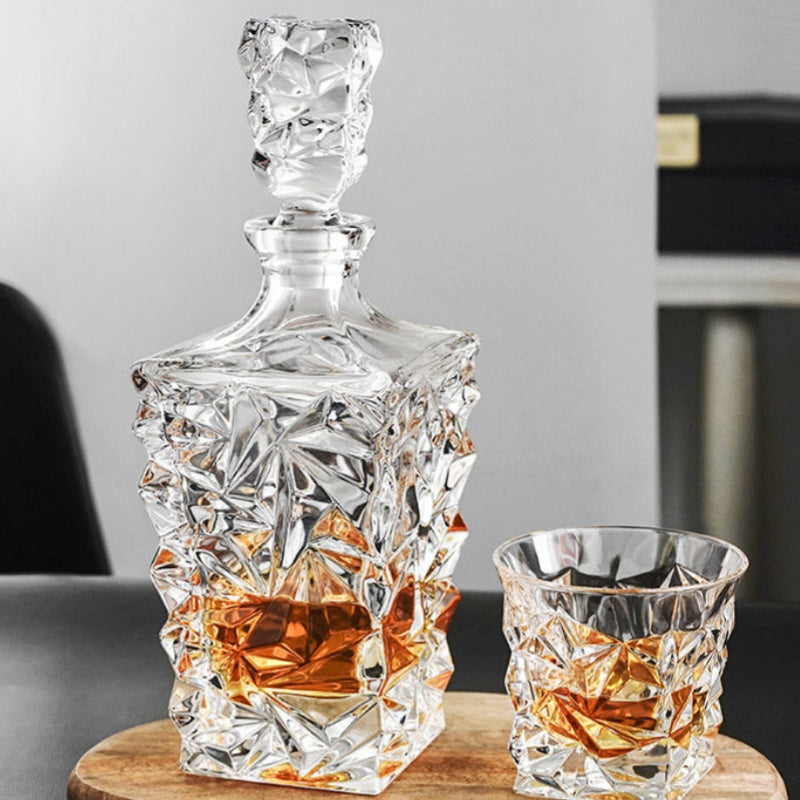
Why use decanter instead of bottle?
The wine bottle arrives at the table in a manner that is both unobtrusive and efficient. It bears its label, vintage, and distinguished provenance; securely sealed and fully traceable, it is a vessel worthy of trust. Given this, why would anyone choose to pour its precious contents into a different container? Why incur the unnecessary risk of exposing the liquid to air—or even invite the potential hazards of spillage or breakage? This is a perfectly reasonable question, yet the answer that lies behind it is nothing short of transformative.
For millennia—whether in the vineyards of wine-producing regions or the distilleries of spirit-making lands—drinkers across the globe have steadfastly upheld the tradition of decanting. Their adherence to this practice stems not from any ignorance regarding the bottle's inherent convenience, but rather from a profound appreciation for the decanter's superior efficacy. The function of the bottle is *storage*; the mission of the decanter is *presentation*. This functional divergence precisely mirrors the fundamental distinction between *potential* and *expression*.
This article aims to delve deeply into the compelling reasons for setting aside the bottle in favor of the decanter—reasons rooted in chemical principles, aesthetic sensibilities, the power of ritual, and, above all, a profound reverence for the liquid itself.

Reason One: Separation from Sediment
The most ancient and undeniable reason to decant is sediment. A bottle of aged red wine, particularly from traditional producers in Bordeaux, Barolo, Rioja, or Burgundy, will inevitably develop solid particles over time. These are not flaws but proof of authenticity—precipitated tannins, tartrates, and pigmented matter that settle slowly against the glass.
If wine is poured directly from such bottles, it is almost certain that the sediment at the bottom will flow into the glass along with it. The consequences are not merely visually unappealing—resulting in a cloudy, grainy-looking liquid—but also lead to a distinctly bitter and astringent sensation on the palate. These sediments contain harsh tannins and potassium bitartrate crystals, which not only create a gritty texture in the mouth but also mask the wine's original fruit aromas.
A decanter offers a definitive solution to this challenge. Simply by allowing the bottle to stand upright for several hours—or even days—prior to serving, the sediment at the bottom will naturally settle toward the bottle's shoulder. Subsequently, in a well-lit environment, the server need only pour with slow, steady movements, transferring the clear liquid into the decanter and stopping immediately as the sediment approaches the bottle's neck. The remaining liquid in the bottle is then discarded, leaving within the decanter a pure, flawless vintage.
No bottle can perform this function. The bottle’s very design—its narrow neck, its opaque or dark-tinted glass—works against sediment management. The decanter, by contrast, is transparent, wide-mouthed, and purpose-built for the slow, watchful pour. For any wine more than eight to ten years old, decanting is not an option but a necessity.
Reason Two: Aeration and the Breath of Life
If sediment removal is the decanter’s oldest purpose, aeration is its most celebrated. When a liquid—wine, whiskey, sake, or spirits—remains sealed in a bottle for months or years, it develops what sommeliers call “bottle stink.” Reductive aromas of sulfur, struck match, or rubber can dominate. Tannins remain tight and aggressive. The liquid is, in a very real sense, asleep.
The decanter wakes it up.
Exposure to air triggers a cascade of chemical reactions. Oxygen softens tannins, converting harsh, astringent compounds into smoother, more approachable ones. Volatile aldehydes and sulfides—the source of many unpleasant odors—evaporate and dissipate. Esters and other aromatic compounds, previously suppressed, rise to dominance. The liquid opens, unfolds, and reveals its complete personality.
A wine bottle simply cannot achieve this. Its narrow neck restricts air exchange to an area no larger than a pinhole. Even when left open for hours, the aeration of the wine within remains confined solely to the liquid's surface—a minuscule circular contact point—leaving the vast majority of the wine still unable to interact with the air.
This difference can actually be perceived through sound. Try listening to the bottle after you have poured out a glass of aerated wine. You will hear the bottle emit a faint, slightly reluctant "gasp." A decanter, however—when gently swirled—lets out a soft, full-bodied "sigh": the sound of the wine breathing freely.
Reason Three: Temperature Control and Consistency
Bottles are poor guardians of temperature. Glass conducts heat readily, and the small volume of a standard bottle (750ml for wine, 700-750ml for spirits) changes temperature quickly when moved from cellar to table. A bottle of red wine that emerges from a 55°F cellar can reach 70°F within twenty minutes in a warm dining room—too warm for serving. White wine and sake, equally vulnerable, warm even faster.
The decanter offers superior thermal management. A larger vessel with thicker walls—particularly lead crystal or high-quality glass—has greater thermal mass. It heats and cools more slowly, buffering the liquid against sudden changes. Some decanters are designed with insulated bases or double walls. Many are shaped to fit comfortably in an ice bucket or cooling sleeve.
Furthermore, the decanter allows the host to serve at the correct temperature without constant adjustment. A bottle must be returned to the cooler or cellar between pours, interrupting conversation and service. A decanter can be placed on the table, poured from repeatedly, and maintain a stable temperature throughout the meal.
For spirits, the decanter’s thermal properties are equally valuable. Whiskey served too warm tastes flat and overly alcoholic. Whiskey served too cold numbs the palate and suppresses aroma. A decanter resting at room temperature delivers every pour at optimal condition—no refrigeration, no warming, no compromise.
Reason Four: The Elimination of Label Bias
This reason is psychological but no less real. When a bottle sits on the table, its label announces everything—producer, region, vintage, price point, critical score. These signals, however useful for purchasing, become liabilities at the table. They preconfigure expectation. They create hierarchy. They distract.
A decanter removes all of this. The liquid is judged on its own terms—by color, aroma, taste, and texture alone. No one knows whether it is a humble table wine or a first-growth Bordeaux. No one calculates its cost. No one compares it to last week’s bottle. The conversation returns to what matters: the sensory experience.
This elimination of label bias is particularly valuable in tastings, where blind assessment is the gold standard. It is also valuable in hospitality, where the host may wish to serve without apology or boast. And it is valuable in personal enjoyment, where the drinker can escape the tyranny of reputation and simply experience.
A bottle cannot offer this freedom. Its label is permanent, visible, and loud. Only the decanter offers silence.
Reason Five: The Ritual of Presentation
There is a reason that fine restaurants decant wines in front of guests, and that collectors display decanters on sideboards. The decanter transforms service into theater.
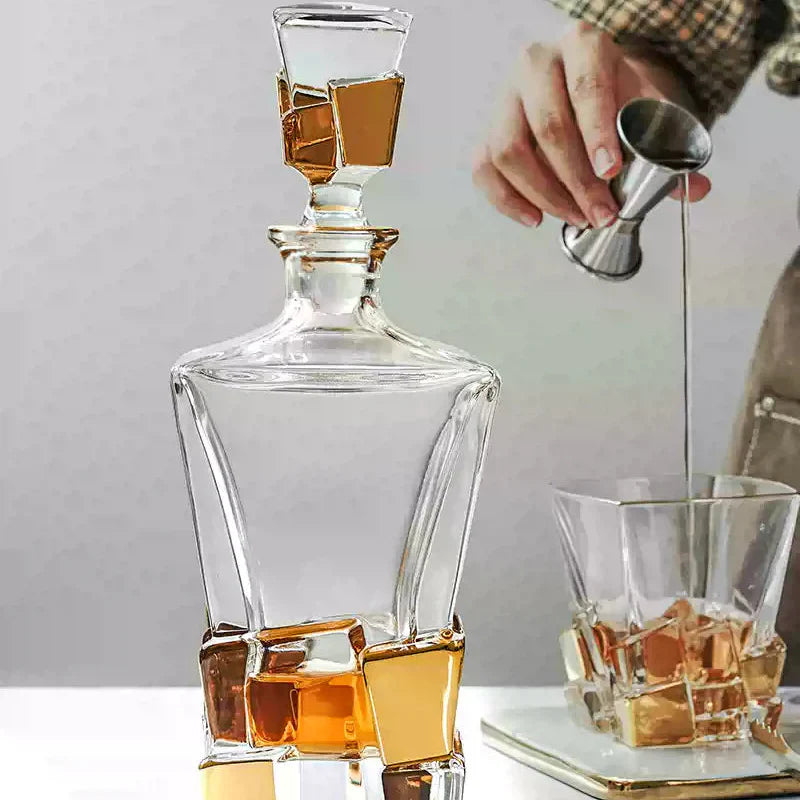
The act of decanting is deliberate, unhurried, and watchable. The slow pour catches the light. The wine cascades down the crystal neck. The sediment is observed and avoided. The decanter is then lifted, examined, presented. This sequence commands attention and respect. It signals that the liquid inside is valued, that the occasion matters, that the drink is not fuel but art.
The bottle, by contrast, is mundane. It arrives with a pop or a twist. It is poured mechanically. It is set aside. No ritual, no theater, no meaning beyond convenience.
For gatherings of significance—anniversaries, achievements, celebrations—the decanter elevates the event. It tells guests that they are worth the extra effort. It tells the host that hospitality is a performance worth rehearsing. And it tells the liquid that it has been chosen, honored, and prepared for its moment.
Reason Six: Aesthetic Harmony at the Table
A bottle is designed for storage, shipping, and shelf display. Its shape is industrial—optimized for pallets, cartons, and warehouse shelves. Its label is commercial—designed to be read from a distance, to compete with neighboring bottles, to announce brand and price.
A decanter is designed for the table. Its shape is sculptural—optimized for the hand, the eye, and the play of light. Its material is jewel-like—cut crystal, hand-blown glass, engraved motifs that catch and scatter illumination. A decanter does not compete with the table setting; it completes it.
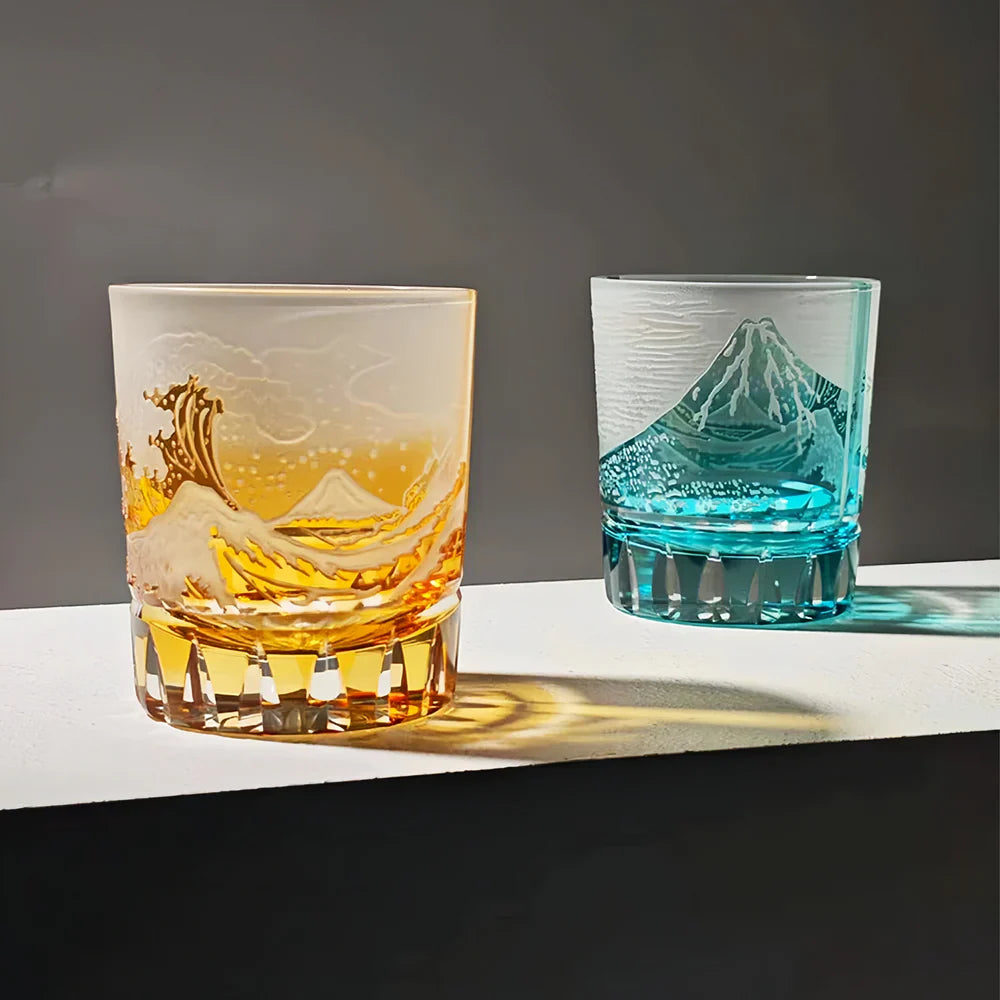
Consider the difference between placing a whiskey bottle next to a roast and placing an Edo Kiriko decanter beside it. The bottle is a product. The decanter is an object. The bottle belongs to commerce; the decanter belongs to art. The bottle is replaced; the decanter is inherited.
For those who care about the visual experience of dining—the total harmony of table, glass, food, and light—the decanter is not optional. It is essential.
Reason Seven: Preservation for Extended Enjoyment
A common misconception holds that decanting always accelerates spoilage. For wine consumed over a single evening, this is true—but for spirits and for wine consumed over multiple days, the decanter can actually improve preservation.
A tightly stoppered decanter, particularly one with a ground glass seal, allows far less air exchange than a partially full bottle. A bottle that is half empty contains a large volume of air slowly oxidizing the remaining wine. A decanter with a floating stopper or a narrow neck and tight seal contains almost no air at all.
While whiskey is not as prone to spoilage as wine, it does indeed lose alcohol and aromatic compounds through evaporation. Consequently, using a decanter fitted with a tight-sealing stopper effectively prevents the gradual evaporative loss that typically occurs with open bottles. As for sake—which is highly susceptible to rapid oxidation—consuming the contents of a decanter within a day or two is actually a more prudent approach than simply recapping an opened bottle and returning it to the refrigerator for storage.
The key lies in selecting a decanter that is appropriately matched to the specific characteristics of the spirit and the anticipated duration of its consumption. If the contents are intended to be consumed within a single evening, any style of decanter will suffice; however, if the liquid is to be stored for several days, a model with excellent sealing capabilities should be chosen. For spirits that take weeks to finish, it is best to opt for a decanter featuring a heavy, substantial stopper and minimal internal headspace.
Reason Eight: The Personal Signature
Finally, the decanter serves as personal expression. A bottle is anonymous—millions of identical units produced, labeled, and distributed. A decanter is singular. It may be inherited, collected, commissioned, or chosen. It carries the owner’s taste, history, and values.
To serve from a decanter is to say: I have chosen this vessel. I have prepared this drink. This moment matters to me. The bottle cannot say this. The bottle has no voice. The decanter speaks for the host, silently and eloquently, with every pour.
The Verdict: The Bottle Stores, the Decanter Serves
The question was: why use a decanter instead of a bottle? The answer has many parts but one conclusion. The bottle is a container for storage, transport, and commerce. It is efficient, standardized, and disposable. The decanter is a vessel for service, expression, and ritual. It is beautiful, intentional, and enduring.
Sediment demands the decanter. Aeration invites the decanter. Temperature control, label bias, presentation, aesthetics, preservation, and personal signature all lead to the same destination. The bottle brings the liquid to the room. The decanter brings it to life.
So pour. Transfer. Decant. Watch the wine cascade, the whiskey glow, the light fracture through crystal. Then serve, and know that you have done more than move liquid from one glass to another. You have honored the drink, the guest, and the moment. The bottle could never do that.
Discover the art of decanting with Edo Kiriko handcrafted crystal—where every pour becomes a ceremony.

Leave a comment
This site is protected by hCaptcha and the hCaptcha Privacy Policy and Terms of Service apply.