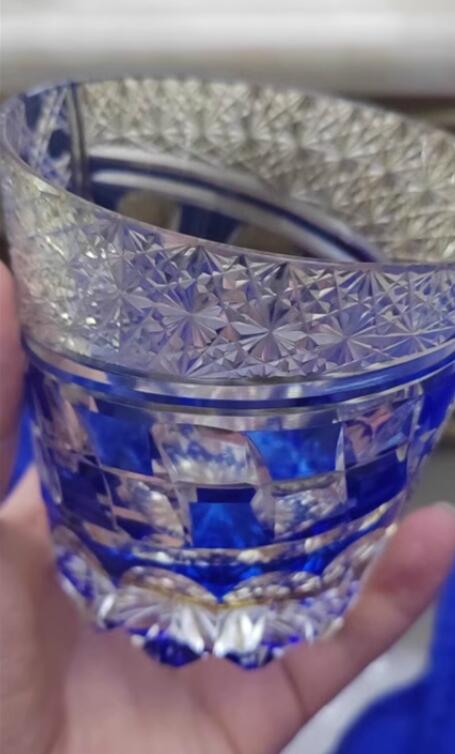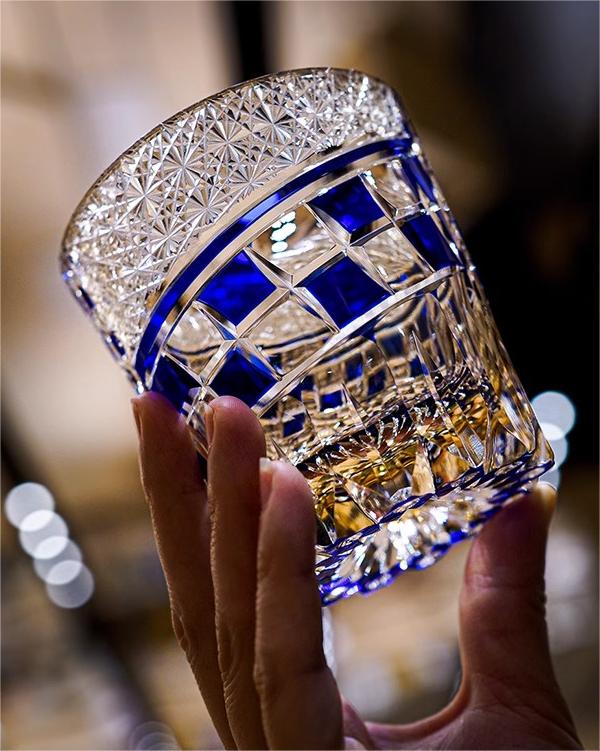


Copa KAGAMI Edo Kiriko, vaso de whisky Longan Eye tallado a mano
Copa KAGAMI Edo Kiriko, vaso de whisky Longan Eye tallado a mano
Edición limitada grabada a mano.
gafas longan
Edición limitada de alta gama/edición grabada a mano/artesanías de lujo ligeras

Vaso de whisky grabado de alta gama.
La serie limitada de alta gama no se trata sólo del precio, sino también del proceso de producción puramente artesanal de la propia taza. Todos están fabricados según el estándar de "grabado de precisión". La textura producida según el estándar de grabado de precisión será el doble de difícil de producir. Si hay incluso una ligera desviación, toda la copa se romperá. Sin embargo, la textura profunda será más tridimensional y más completa que la textura de grabado superficial ordinaria, es llamativa. Toda la copa de vino es más clara y transparente debido a su textura más fina y hermosa, y naturalmente irradia una luz encantadora.

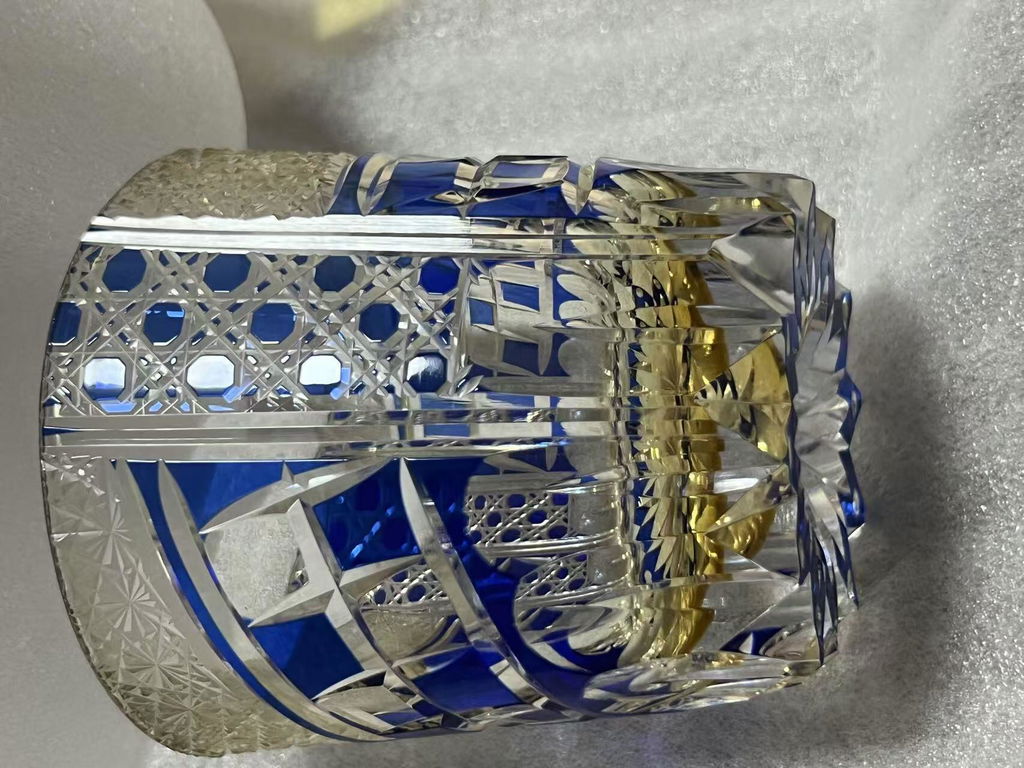
Estilo de ojos longan
El modelo Longan es más exclusivo que la mayoría de los modelos. El cuerpo de la copa está entrelazado de forma creativa y simétrica con profundos tallados en ambos lados. Cada lado de toda la copa tiene su propia expresión visual única. Este vaso de whisky Kiriko hecho a mano de alta gama no solo es una herramienta afilada para la degustación de vinos, sino también una exquisita obra de arte, adecuada para ocasiones de alto nivel o como regalo para personas importantes.

negro azabache
La copa de vino adopta un diseño de fondo dorado ámbar de alta gama, creando una sensación de lujo y misterio. La copa de vino de color negro azabache tiene una apariencia simple y elegante, y el magnífico fondo grabado en oro ámbar hace que toda la copa de vino luzca más refinada y noble.

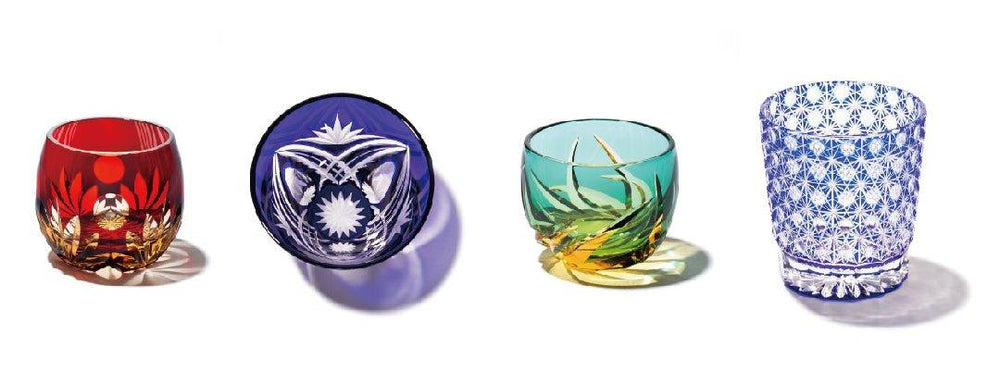
fluorita morada
Con un precioso tono violeta, parece una copa de vino hecha de piedras preciosas de fluorita. La forma grabada brilla como un diamante, añadiendo un temperamento noble y elegante a la copa de vino. El tono violeta brinda a las personas una sensación misteriosa y romántica y complementa la forma de diamante grabada, haciendo que toda la copa de vino exuda un brillo encantador.

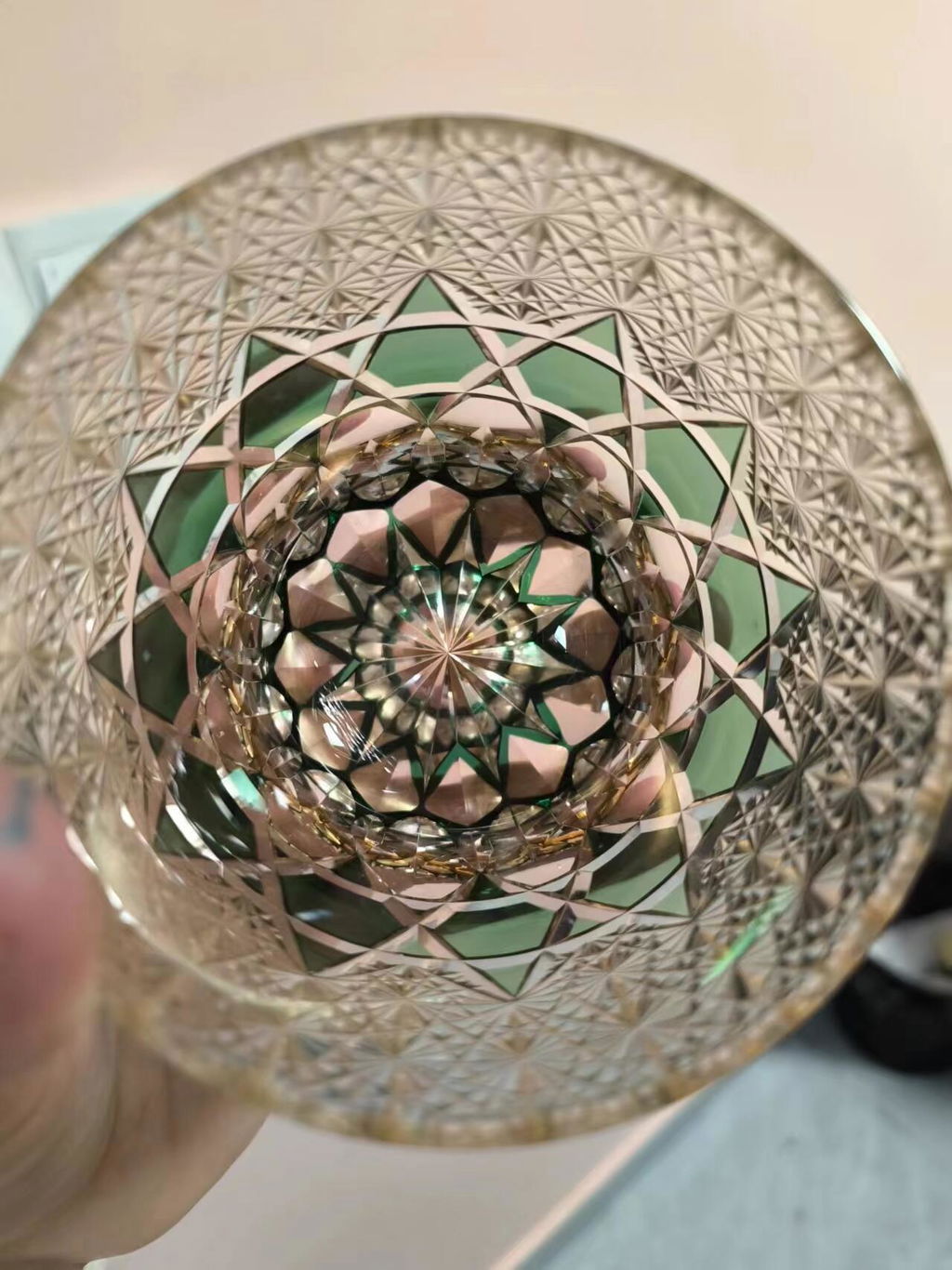
Los grabados inferiores grabados con precisión de alta gama son más profundos que tipos similares de copas kiriko. Los grabados en el fondo de la copa florecen como flores y son deslumbrantes. Por lo tanto, el brillo y la refracción del objeto real serán más claros y se verán hermosos colores.

fluorita verde
Noble y elegante, parece una copa de vino hecha de esmeralda. Las finas tallas y los exquisitos adornos de oro ámbar hacen que toda la copa de vino exuda un brillo encantador. Este tipo de copa de vino no solo es adecuada para degustar whisky, sino también una decoración exquisita que puede agregar un ambiente artístico único a su hogar u oficina.

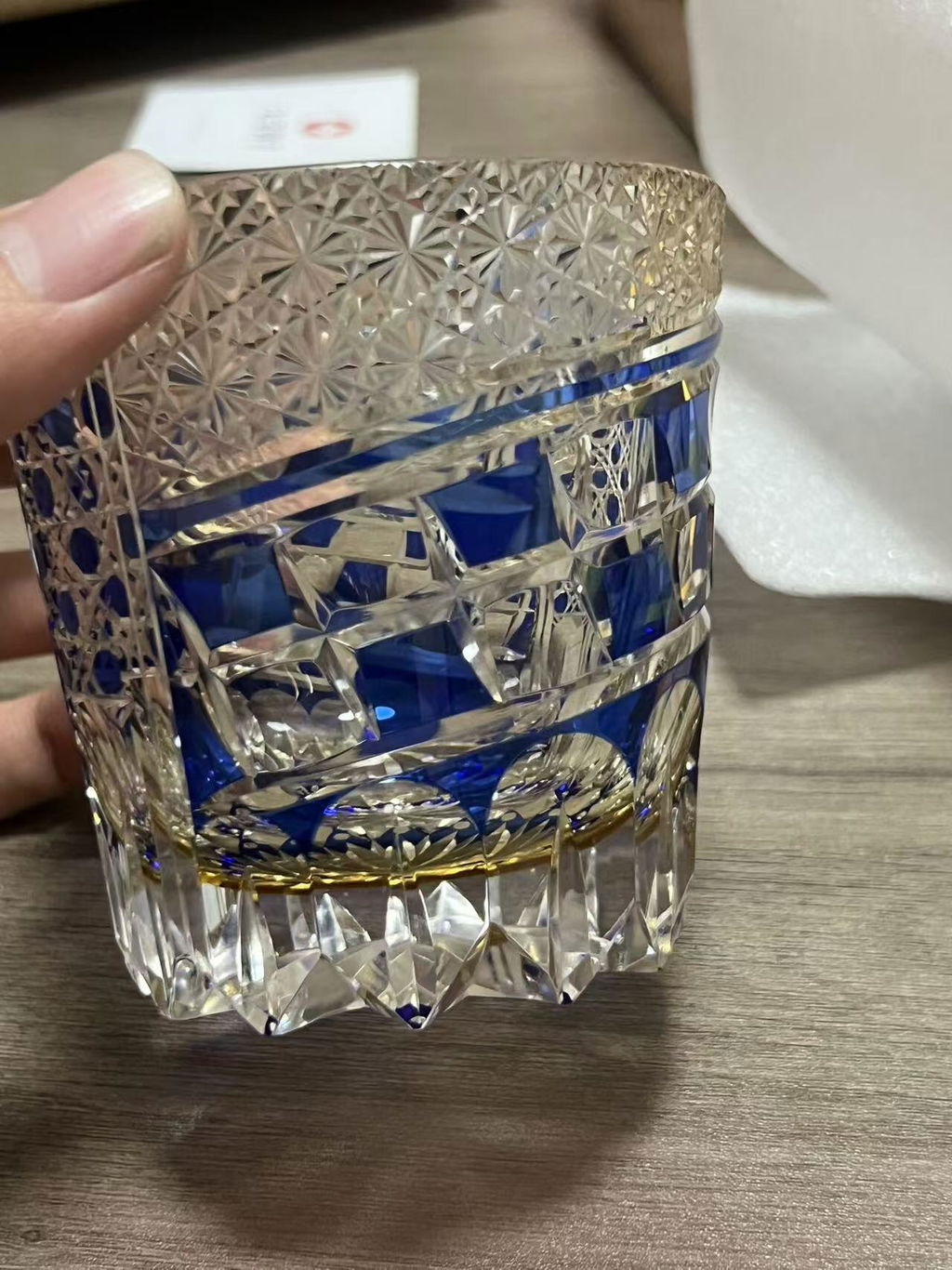
azul real
El color azul real suele dar a las personas una sensación de nobleza y elegancia. La combinación de colores azul y dorado es más clásica y avanzada. El azul real representa nobleza y elegancia, mientras que el ámbar irradia calidez y lujo. Esta combinación de colores no solo es adecuada para banquetes de alto nivel y ocasiones sociales, sino que también puede agregar una atmósfera lujosa y elegante al ambiente hogareño.

Hay una belleza en poseer una copa Edo Kiriko. Levante una copa y experimente el hermoso mundo parecido a un caleidoscopio. No importa si viertes agua mineral, whisky, cerveza o licor, el vaso emitirá un brillo similar al del vidrio, dejándote hipnotizado.

Artesanía: hecho a mano
Material: cristal
Tamaño: diámetro 10 cm, altura 9 cm, capacidad 360 ml, peso 350 g
Precauciones:
Debido a que el cuerpo de la taza está tallado y no hecho de material resistente al calor, no es resistente a altas temperaturas. Están prohibidas las bebidas calientes. La temperatura excesiva puede causar daños. Se recomienda que la temperatura máxima no supere los 60°C. Está prohibido su uso en armarios de desinfección y lavavajillas.
Debido al proceso de tallado manual por soplado en caliente, puede haber ligeras diferencias en el patrón y el color del producto, y el cuerpo de la taza puede tener ligeras marcas hechas a mano, microburbujas, líneas de agua e impurezas menores. Está limitado por la artesanía y no es un problema de calidad defectuoso. No es fácil hacerlo a mano, por favor comprenda.


Specifications
Product Care
MAIN TAINING
HAND WASH
To prevent damage to items, it is recommended to clean them individually using warm water and non-abrasive cleaning products. We recommend setting your dishwasher on gentle mode or washing gently by hand.
DRY AND WIPE
Place the glass on a towel or absorbent kitchen paper and blot it dry, or wipe it carefully while holding the body with your thumbs to reduce pressure. Use lint-free fine cotton or linen towels. Put the cups back into the box or stand them upright without touching each other.
STORAGE and PRESERVATION
The edges of handmade crystal wine bottles are very thin, so they should be placed in a cupboard or packaging box with the cup mouth facing upward to prevent the cup mouths from touching each other. Do not stack wine bottles or hang them with hooks to avoid cracking the handles. Wine bottles should be stored in a clean and tidy place, with the mouth of the cup facing up and the cap open for ventilation.
MAINTENANCE
Do not leave wine in the bottle. Please clean it in time after use. The decanter must be cleaned with a soft sponge in warm water. Do not use detergent. If fog appears, pour some coarse salt and half a liter of alcohol. Shake vigorously and rinse with warm water several times. Insert absorbent kitchen paper into the cup for about 10 hours to absorb residual moisture.
The crystal glass material is purely hand-blown. Occasionally small bubbles and small scratches are normal phenomena. The crystal material is not resistant to high temperatures and cannot be heated and steamed. It is not suitable for boiling water to be poured directly into it. It is only suitable for daily tea temperatures below 50~60℃.
Elige opciones

Design
Crafting Of Edo Kiriko
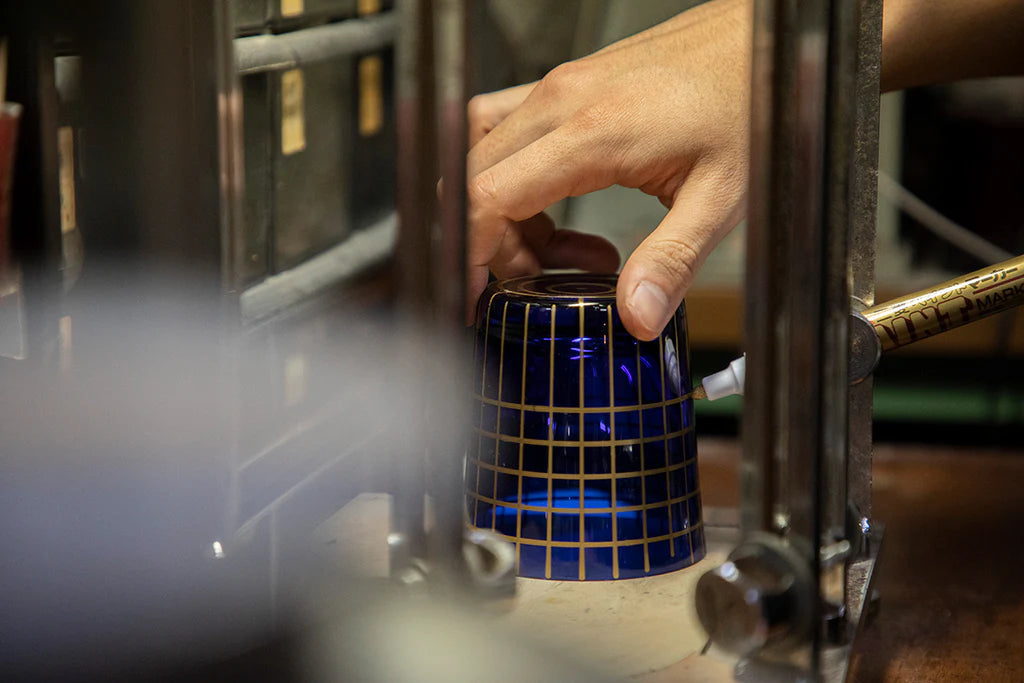
The artist marks simple grid lines on the glass without drawing a design to provide the plan's framework. The design grid is drawn on the glass's surface using a bamboo stick or brush with red iron oxide. Next, the baselines of the design are lightly etched using a whetstone. Relying on these fine marks and lines, the delicate patterns of Edo kiriko are created with the artisan's expertise and skills.
First Cut
The base design is cut to about three-quarters of the final width and depth. The surface of the glass is cut using a sand paste-coated metal disc rotating at high speed. Generally, emery powder with many abrasive particles is used to create the sand paste. The clear pattern border lines and the irregular patterns are cut little by little. The balance between the thickness and depth of the cut lines relies upon the artisan's years of experience, as there are no detailed sketches.

Adjustments
The patterns cut in the second stage are adjusted, and the surface is smoothly polished in this process. A whetstone disc, natural or artificial, is used to cut delicate patterns which cannot be created with the metal disc used in the prior process. This is the last cutting stage to complete the designs, so careful work is required not to leave any powder residue and to ensure a brilliant finish.

Polishing
This is the final stage of production, and it is usually carried out on soda-lime glass (most prevalent type of glass). The opaque surface left by the third stage is returned once more to its original transparent state, with the attractive shine and sparkle typical of Edo kiriko. Chemical processing with hydrofluoric acid is also applied for high-class crystal glass. Depending on the piece, a variety of different polishing discs are used, such as paulownia wood discs, willow wood discs, hair brush discs, and belt discs. The final work is polished by applying water and polishing powders to obtain a glittering finish, while fine sections are polished with a cloth or a brush. To complete the final polishing, a cloth buffing disc is used to bring out the sparkle and shine of the cut glass.