
Is it spelled whiskey or whisky?
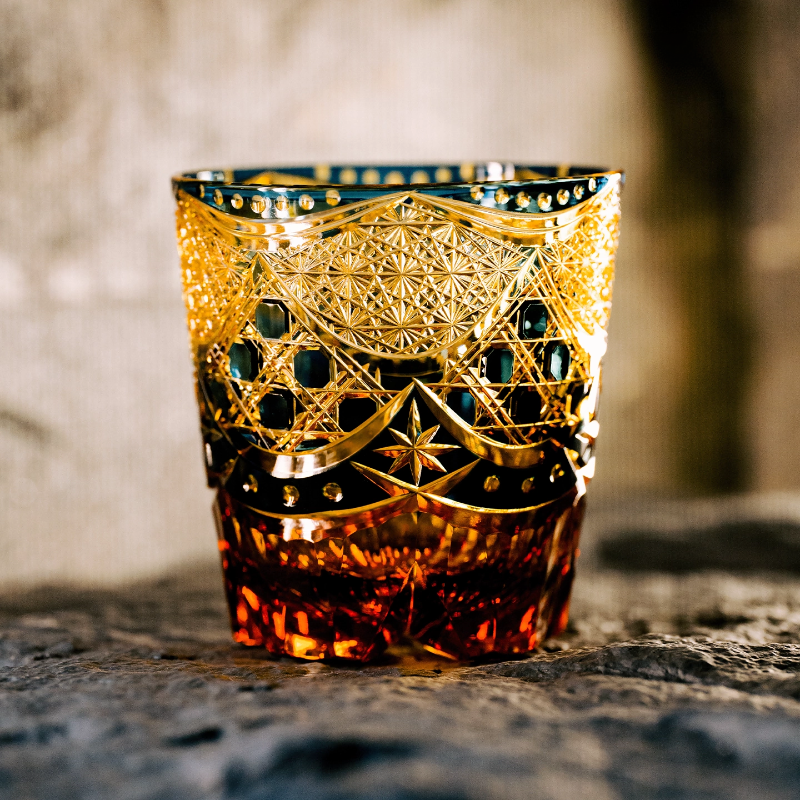
Before we explore the fascinating distinction between "whiskey" and "whisky," let us first consider the vessel that elevates the entire tasting experience: the Edo Kiriko Yoru no Tobari Cut Crystal Whisky Glass with Wooden Box. This extraordinary glass captures the dramatic beauty of nightfall through deep sapphire blue, warm amber crystal, and intricate cut-glass artistry. Its layered color palette evokes the moment when the last glow of sunset meets the depth of the evening sky, creating a whisky glass with a bold, refined, and highly decorative presence.

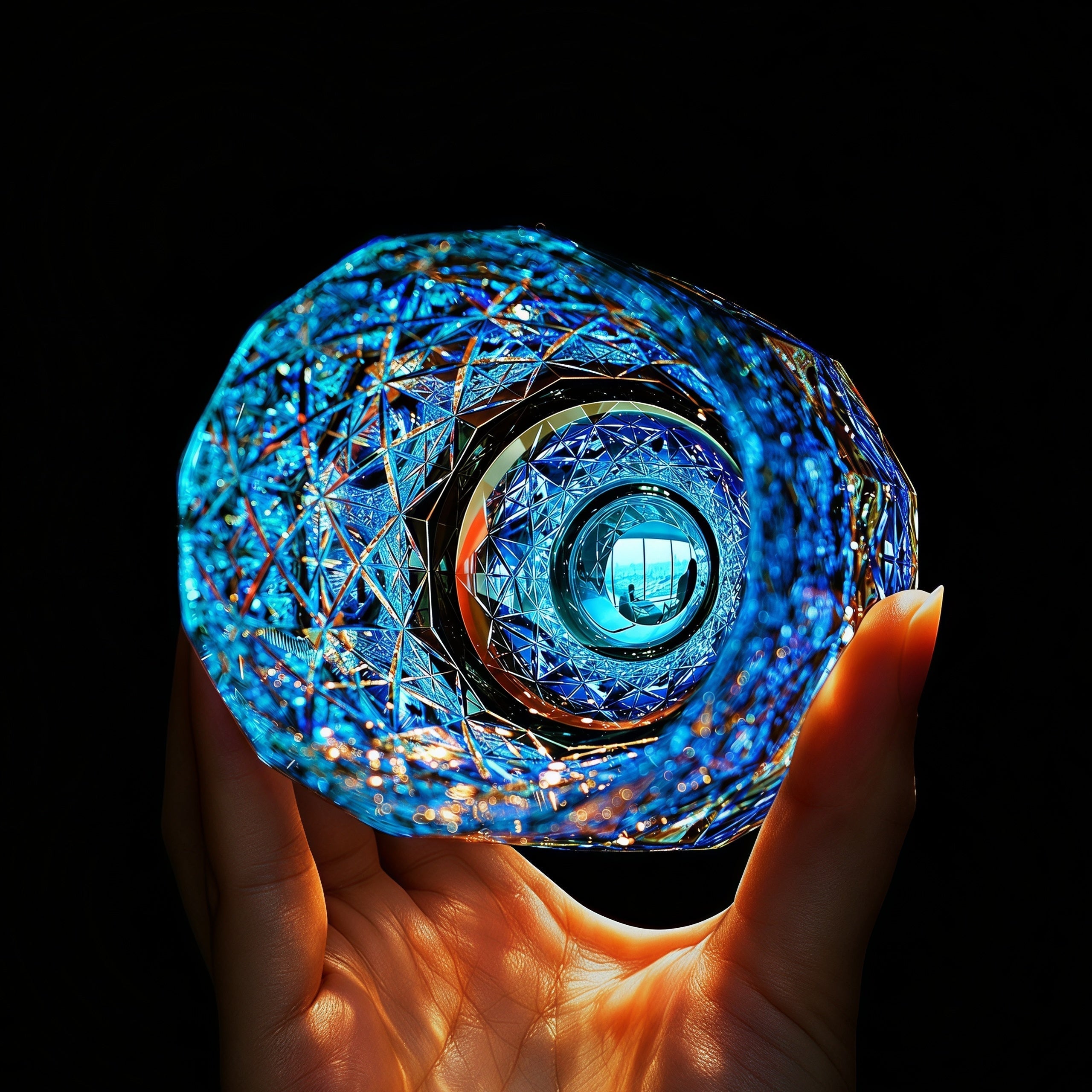
The upper section of the glass features intricate *Edo Kiriko* style cuts, showcasing a variety of patterns such as geometric grids, starbursts, and cascading fan motifs. These sharply defined, artfully arranged facets capture and refract light, imbuing the glass with a jewel-like brilliance from every angle. A deep blue overlay creates a profound, mysterious allure, while the transparent cut sections allow light to pass through, revealing stunning clarity.
The amber-colored base at the bottom offers a warm contrast to the cool-toned blue body. When filled with whisky, the spirit’s hue blends naturally with the amber glass, radiating a rich, mellow glow that exudes elegance. The faceted base not only provides ideal weight and balance but also adds a sense of visual substance and strength, ensuring a solid, comfortable grip. More than just a drinking vessel, this is a masterpiece that pays homage to centuries of Japanese craftsmanship, elevating the ritual of whisky appreciation.
With this exquisite glass as our companion, let us now turn to a question that has perplexed connoisseurs and casual drinkers alike: is it spelled "whiskey" or "whisky"?
The Geographic Divide: A Simple Rule
For the uninitiated, the difference between "whiskey" and "whisky" might seem like a trivial spelling error. For connoisseurs, however, it is a distinction that carries centuries of history, geography, and cultural identity. The answer to which spelling is correct depends entirely on where the spirit was produced—and understanding this difference adds a layer of appreciation to every pour, especially when enjoyed from a vessel as refined as the Yoru no Tobari.
The general rule is simple and clear: whiskies produced in Scotland, Japan, Canada, and Australia are spelled "whisky" (without the letter "e"), while those from Ireland and the United States are spelled "whiskey" (with the letter "e"). This distinction is highly reliable, allowing one to identify the spirit's origin at a glance. If a label reads "whisky," you can generally conclude it comes from Scotland, Japan, or Canada; conversely, "whiskey" indicates an Irish or American origin.
This regional spelling difference is not arbitrary; rather, it reflects the historical evolution of the spirit in different countries. As the two pioneers of whisky production, Ireland and Scotland established their respective spelling conventions long ago—conventions that have persisted to this day, even as the spirit spread to other parts of the world.
The Scottish Tradition: Whisky Without the 'E'
Scotland, the spiritual home of single malt whisky, has always used the spelling "whisky." The term derives from the Gaelic phrase uisge beatha, meaning "water of life"—a translation of the Latin aqua vitae. The Scottish spelling has remained remarkably consistent throughout the centuries, becoming the standard for all whisky produced in Scotland under the protection of law.
This spelling convention is not limited to Scotland; it extends to Japan, where the whisky industry was pioneered by individuals who studied and emulated Scottish distilling techniques. Japanese whisky brands such as Suntory and Nikka proudly use the "whisky" spelling to highlight their direct lineage to Scottish traditions. Similarly, Canadian whisky—with its distinctive style—also follows the Scottish spelling convention.
The Irish and American Tradition: Whiskey with the 'E'
Ireland, which claims to be the birthplace of whiskey, uses the spelling with an 'e.' The Irish tradition dates back to at least the 12th century, and Irish whiskey was once the most popular spirit in the world. The 'e' is sometimes said to stand for "excellent" or "extraordinary"—an appealing piece of folklore, though likely a later invention rather than historical fact.
The United States inherited the Irish spelling, largely due to the significant Irish immigrant population that shaped American whiskey production. From bourbon to rye, American whiskey proudly carries the 'e,' distinguishing it from its Scottish and Japanese counterparts. This spelling has become so deeply associated with American whiskey that it has taken on its own cultural significance.
The Exceptions That Prove the Rule
As with any rule, there are exceptions. U.S. craft spirit producers sometimes opt for the "whisky" spelling to signal their admiration for Scottish or Japanese production methods. Conversely, some Irish producers have experimented with the Scottish spelling for marketing reasons. Yet, within a system that remains generally consistent, these instances are ultimately rare exceptions.
It is worth noting that the industry itself often deviates from this convention. In the United States, the Federal Standards of Identity for Distilled Spirits designate "whisky" as the standard spelling in official regulations. This creates a peculiar situation: the legal definition employs one spelling, while the commercial market overwhelmingly uses another.
The Yoru no Tobari: A Vessel Worthy of Both Spellings
The "Yoru no Tobari" (Curtain of Night) Edo Kiriko whisky glass is a magnificent example of exquisite Japanese craftsmanship. The traditional Edo Kiriko technique involves carving intricate geometric patterns into colored glass to reveal the clear crystal layer beneath; this process demands not only years of honed skill but also an exceptionally steady hand. Featuring a dual-tone design—sapphire blue at the top and amber at the base—the glass vividly captures the enchanting transition from twilight to the darkness of night.
The accompanying wooden box lends an air of prestige to this masterpiece, which seamlessly blends functionality with artistry. Each glass is individually handcrafted and unique—a distinctiveness that serves as a hallmark of authenticity and resonates with the spirit of craftsmanship found in the production of premium whiskies in Scotland, Japan, Ireland, and the United States.
When whisky (or whiskey) is poured into the Yoru no Tobari, the amber liquid harmonizes with the glass's warm base, creating a glowing effect that enhances the visual appreciation of the spirit. The intricate star cuts and latticework patterns catch the light, refracting it into a dance of colors that rivals the complexity of the spirit itself. This is the kind of glass that transforms a simple drink into a ritual, inviting the drinker to savor not just the taste but the entire sensory experience.
Conclusion: A Question of Heritage, Not Spelling
Ultimately, whether you call it whiskey or whisky depends on where the spirit comes from, not on which is "correct." Both spellings carry centuries of tradition, both have produced spirits of extraordinary quality, and both deserve to be celebrated. The Irish and Scots may have their differences, but they also share a profound respect for the craft.
As you contemplate which spirit to pour—perhaps a Scottish single malt, a Japanese blended whisky, an Irish single pot still, or an American bourbon—consider the words of Frank McCourt: "The Irish gave the world whiskey and the Scots took it and improved it." While the debate over superiority will continue, one thing is certain: the Edo Kiriko Yoru no Tobari Whisky Glass is an inspired choice for any serious collector. Its dramatic beauty and exquisite craftsmanship make it the ideal companion for appreciating the world's finest whiskies—however you choose to spell them.

Hinterlasse einen Kommentar
Diese Website ist durch hCaptcha geschützt und es gelten die allgemeinen Geschäftsbedingungen und Datenschutzbestimmungen von hCaptcha.