
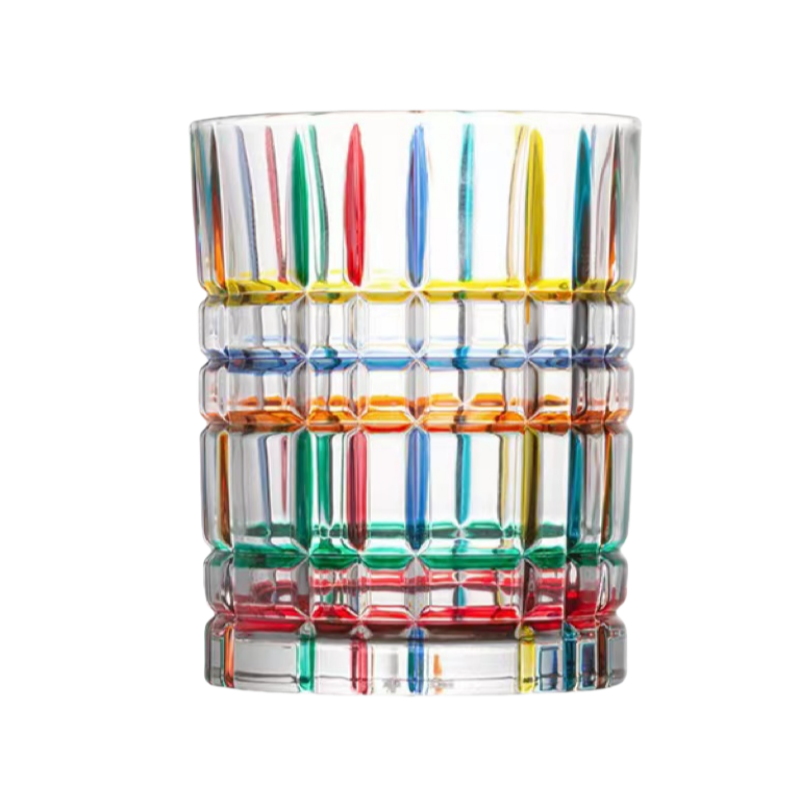
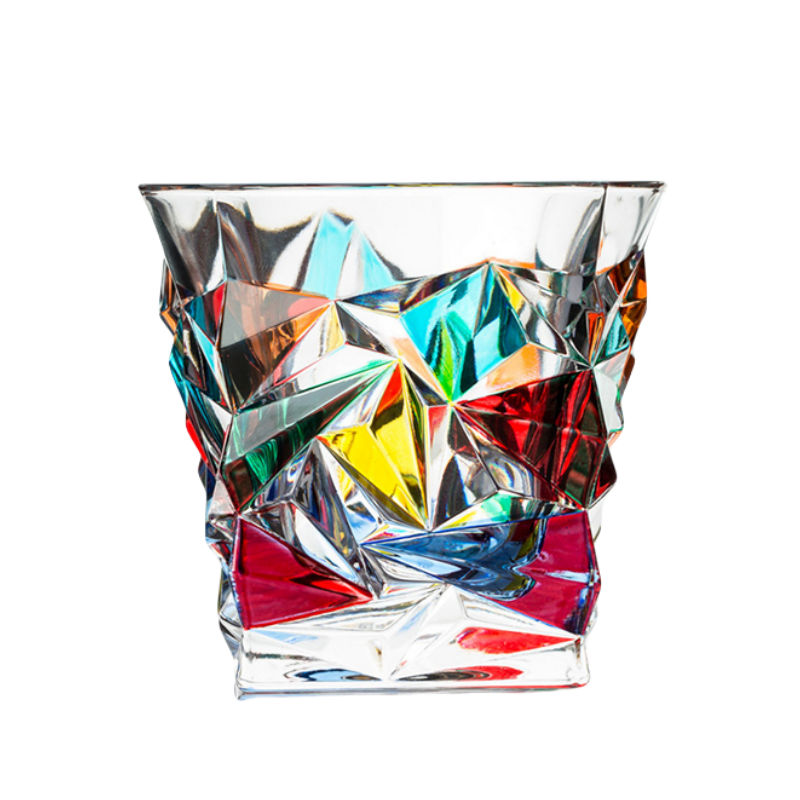
ZECCHIN Farbiges Glas Weinglas Whisky Mosaik Weinglas
ZECCHIN Farbiges Glas Weinglas Whisky Mosaik Weinglas
ZECCHIN-Serie
Brillante Farben wie Glas, altes Kunsthandwerk
Murano-Glasmalereien erfreuen sich in Europa großer Beliebtheit und sind Teil der Sammlungen vieler Museen.

Wunderschöne Farben
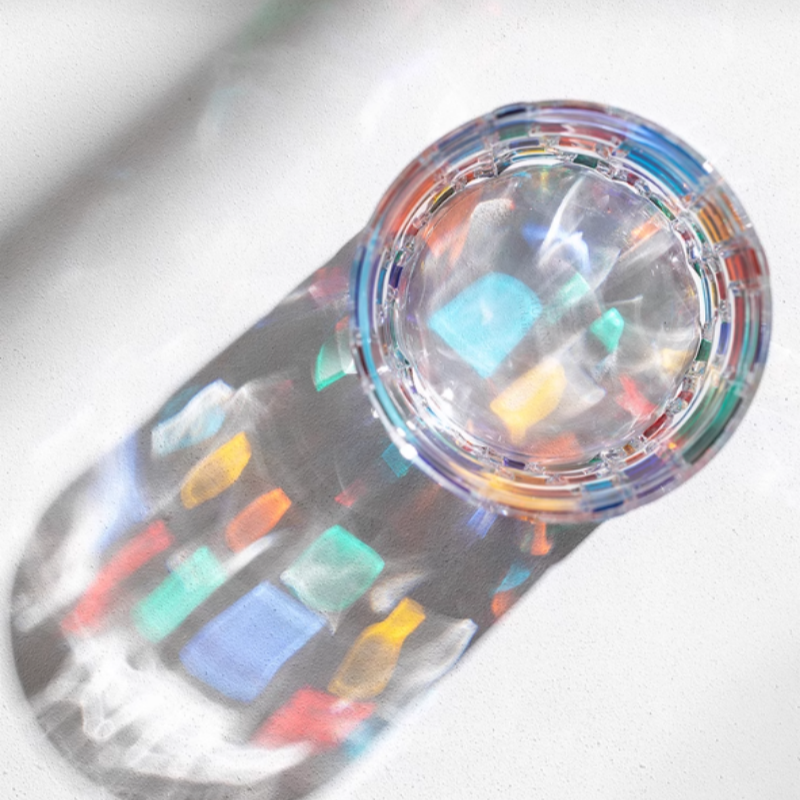
Dabei wurden die leuchtenden Farben gewählt, die die Italiener so lieben. Sie wirken durch die Lichtbrechung sehr schön und farbenfroh und sorgen für eine hellere Stimmung.


Reichhaltige Stile
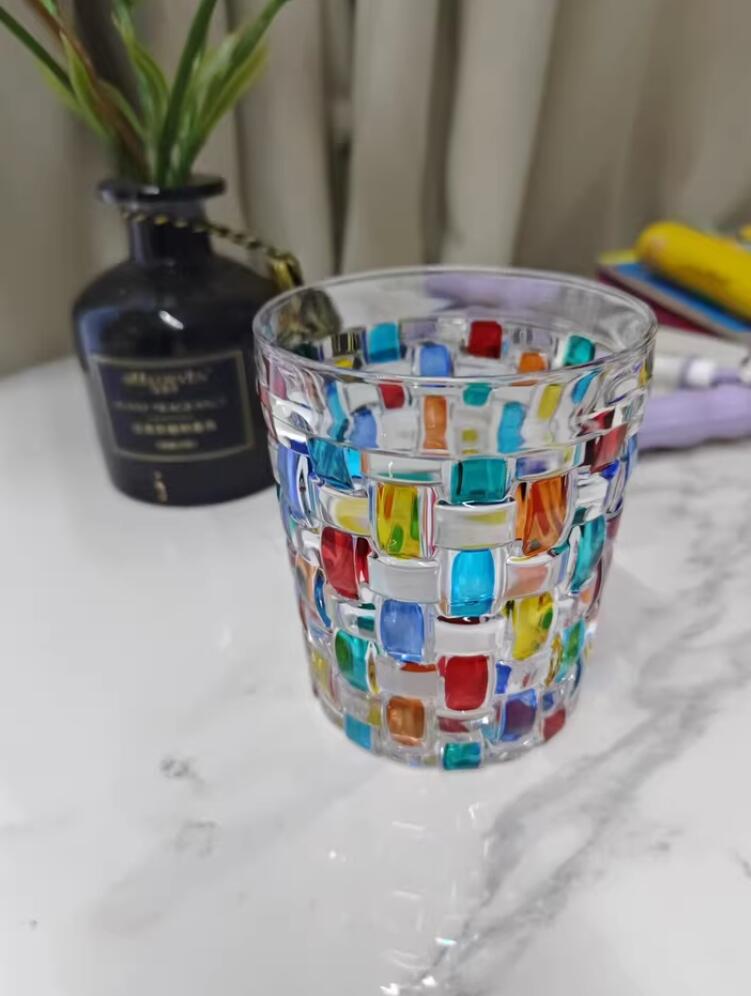
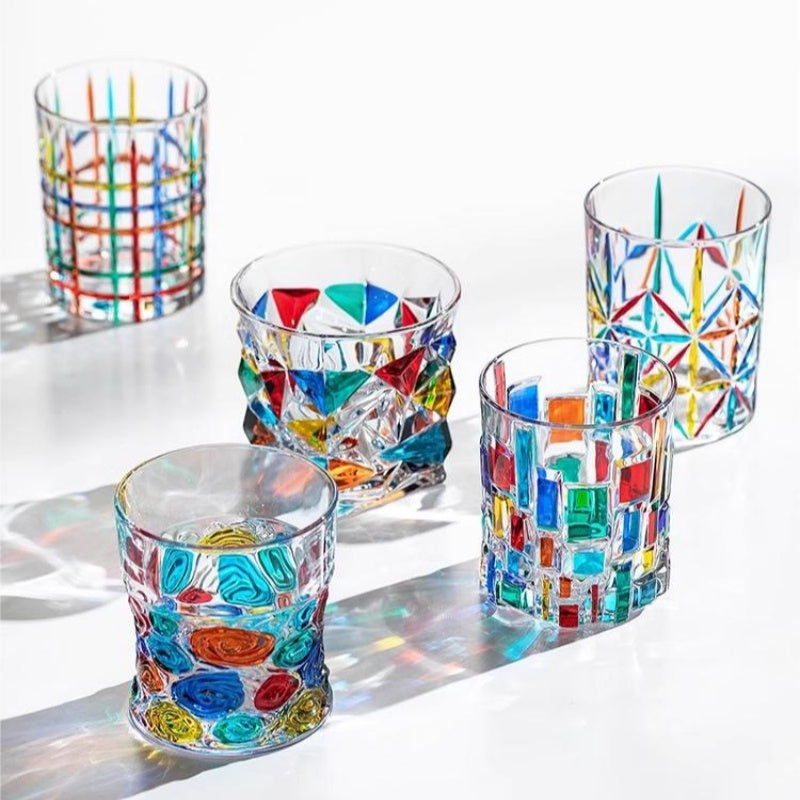
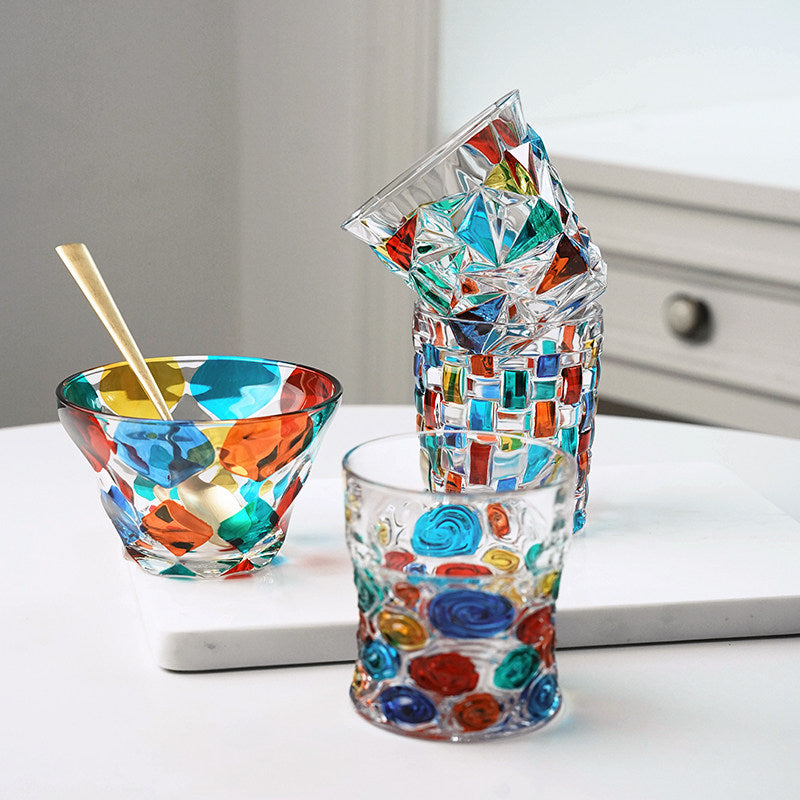
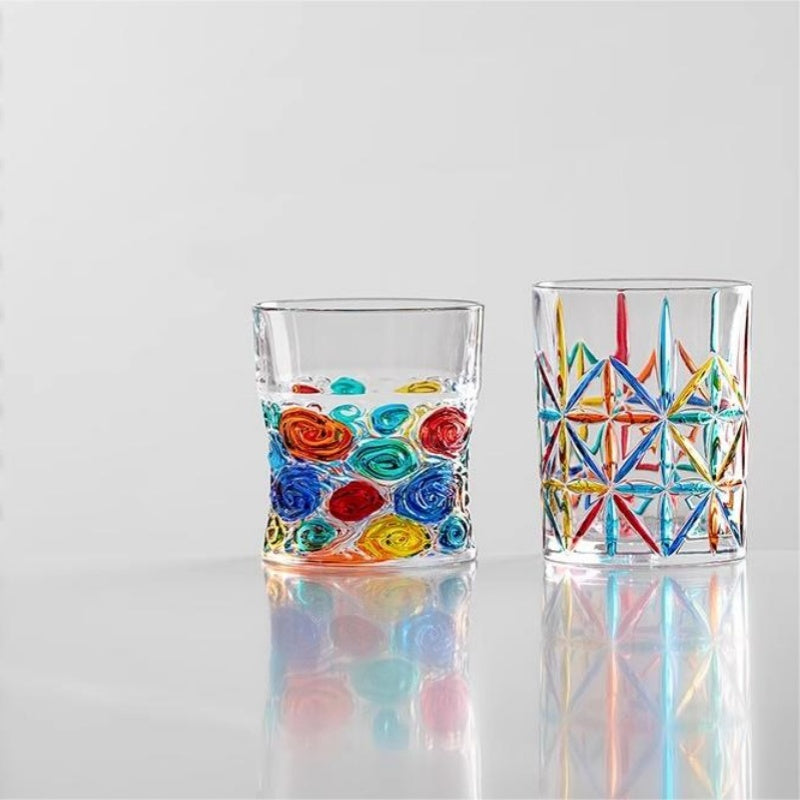
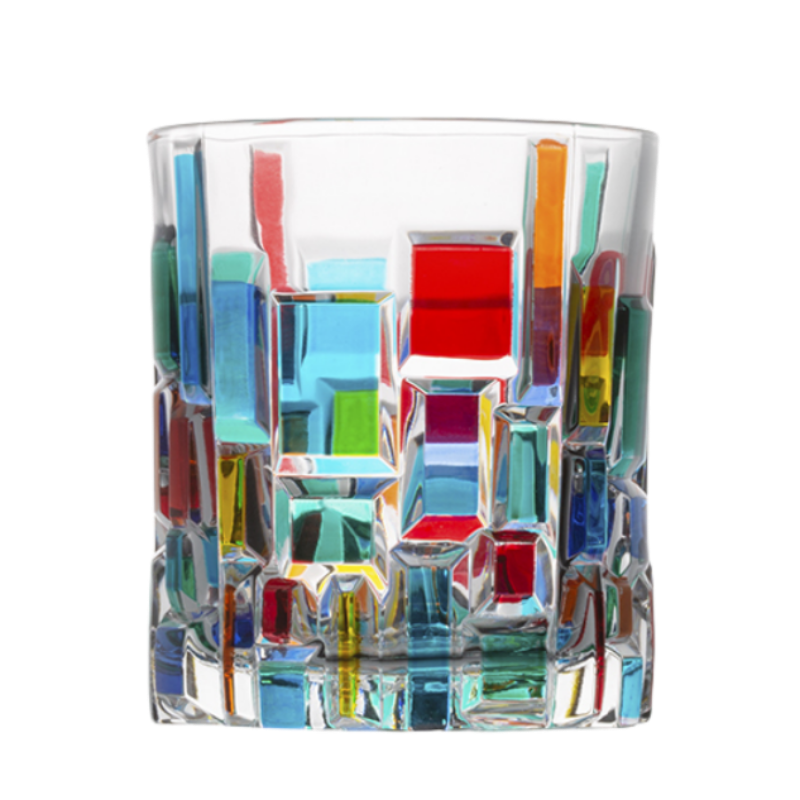
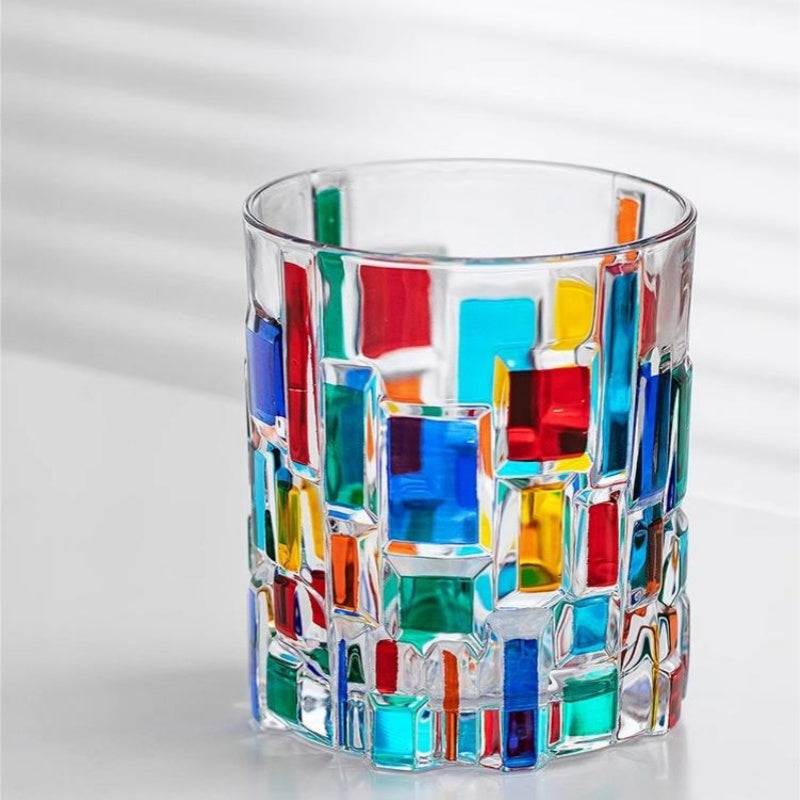
Kariertes Muster, Mosaikmuster, Van Gogh-Muster. Es stehen mehrere Gefäßformen und -muster zur Verfügung. Einfache geometrische Formen werden auf die Farbe des Glases abgestimmt, das einen starken künstlerischen Touch hat.


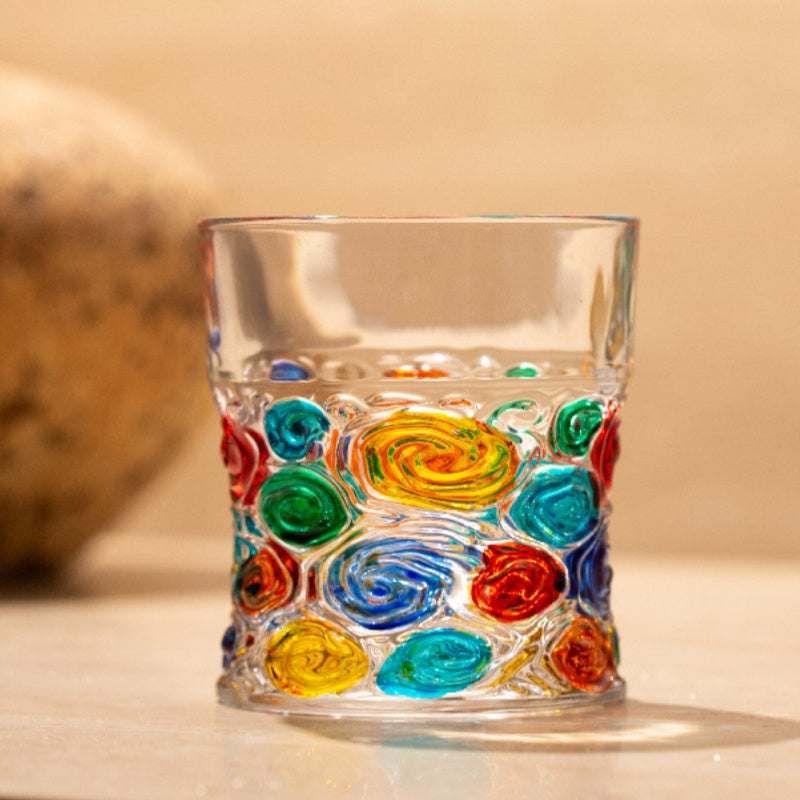
Van Gogh-Muster
In der Tasse ist ein wunderschönes Muster im Stil von „Sternenmondnacht“ zu sehen, als ob Sie in einer Kirche wären und durch das Glasfenster zu den Sternen hinaufschauen würden.

farbige Diamanten
Die diamantähnlich funkelnde Schliffoberfläche macht aus einem Glas mit Whiskey in der Hand nicht nur ein Weinglas, sondern auch ein Kunstwerk.

Verantwortlich für die Quintessenz der Nation
Muranoglas wird in einem alten Herstellungsverfahren hergestellt, dessen Beherrschung Jahrzehnte dauert. Es gehört zur „nationalen Quintessenz“ und zum „immateriellen Kulturerbe“ Italiens und gilt als italienisches Nationalgeschenk.

Glatter Körbchenkörper
Der gesamte Tassenkörper ist glatt und bequem, was den Griffkomfort verbessert.

Gießen Sie sich nach der Arbeit ein Glas Whisky ein. Unter der untergehenden Sonne scheint das Licht auf das Weinglas. Eine Kunstausstellung aus Licht und Schatten erscheint in Ihren Augen, die Ihre müde Stimmung bei der Arbeit beruhigt und die Erschöpfung des ganzen Tages loslässt.

Weinglas-Serie ZECCHIN
Material: Glas
Handwerkskunst: Manuell

Freundliche Tipps
1. Handgefertigte Glasprodukte können gelegentlich Blasen, unterschiedliche Muster und Farben, leichte Unterschiede in Größe oder Gewicht sowie leichte Kratzer aufweisen. Aufgrund des Einflusses von Temperatur, Glaseigenschaften und anderen Faktoren während des Handherstellungsprozesses ist dies schwer zu vermeiden und hat keinen Einfluss auf die Verwendung. Wenn Sie die Eigenschaften der Handarbeit verstehen, ist dies eine herzliche Sache.
2. Bitte üben Sie bei der Verwendung keinen starken Druck aus, achten Sie darauf, nicht zu stoßen, und bringen Sie es nicht mit starken Laugen oder Säuren in Kontakt.
3. Vermeiden Sie plötzliche Kälte und plötzliche Hitze, vermeiden Sie die Verwendung bei hohen Temperaturen, verwenden Sie möglichst warmes Wasser und die Betriebstemperatur sollte 50 °C nicht überschreiten.
4. Mit warmem Wasser abspülen. Die Wassertemperatur sollte sich leicht heiß anfühlen.
5. Stellen Sie die Tasse nach dem Ausspülen verkehrt herum auf ein flaches, sauberes Tuch und lassen Sie das Wasser natürlich trocknen.
6. Nachdem das Wasser auf dem Tassen-/Topfkörper getrocknet ist, wischen Sie die verbleibenden Wasserflecken mit einem trockenen Reinigungstuch ab.
7. Verwenden Sie zum Schrubben keine harten Gegenstände wie Stahlkugeln. Es wird empfohlen, zum Reinigen einen Schwamm, ein weiches Tuch und ein neutrales Reinigungsmittel zu verwenden.
8. Glas ist dünn und leicht. Es wird nicht empfohlen, es in der Mikrowelle, Spülmaschine oder im Backofen zu verwenden, um Verschleiß zu vermeiden.
Specifications
Product Care
MAIN TAINING
HAND WASH
To prevent damage to items, it is recommended to clean them individually using warm water and non-abrasive cleaning products. We recommend setting your dishwasher on gentle mode or washing gently by hand.
DRY AND WIPE
Place the glass on a towel or absorbent kitchen paper and blot it dry, or wipe it carefully while holding the body with your thumbs to reduce pressure. Use lint-free fine cotton or linen towels. Put the cups back into the box or stand them upright without touching each other.
STORAGE and PRESERVATION
The edges of handmade crystal wine bottles are very thin, so they should be placed in a cupboard or packaging box with the cup mouth facing upward to prevent the cup mouths from touching each other. Do not stack wine bottles or hang them with hooks to avoid cracking the handles. Wine bottles should be stored in a clean and tidy place, with the mouth of the cup facing up and the cap open for ventilation.
MAINTENANCE
Do not leave wine in the bottle. Please clean it in time after use. The decanter must be cleaned with a soft sponge in warm water. Do not use detergent. If fog appears, pour some coarse salt and half a liter of alcohol. Shake vigorously and rinse with warm water several times. Insert absorbent kitchen paper into the cup for about 10 hours to absorb residual moisture.
The crystal glass material is purely hand-blown. Occasionally small bubbles and small scratches are normal phenomena. The crystal material is not resistant to high temperatures and cannot be heated and steamed. It is not suitable for boiling water to be poured directly into it. It is only suitable for daily tea temperatures below 50~60℃.
Optionen auswählen

Design
Crafting Of Edo Kiriko
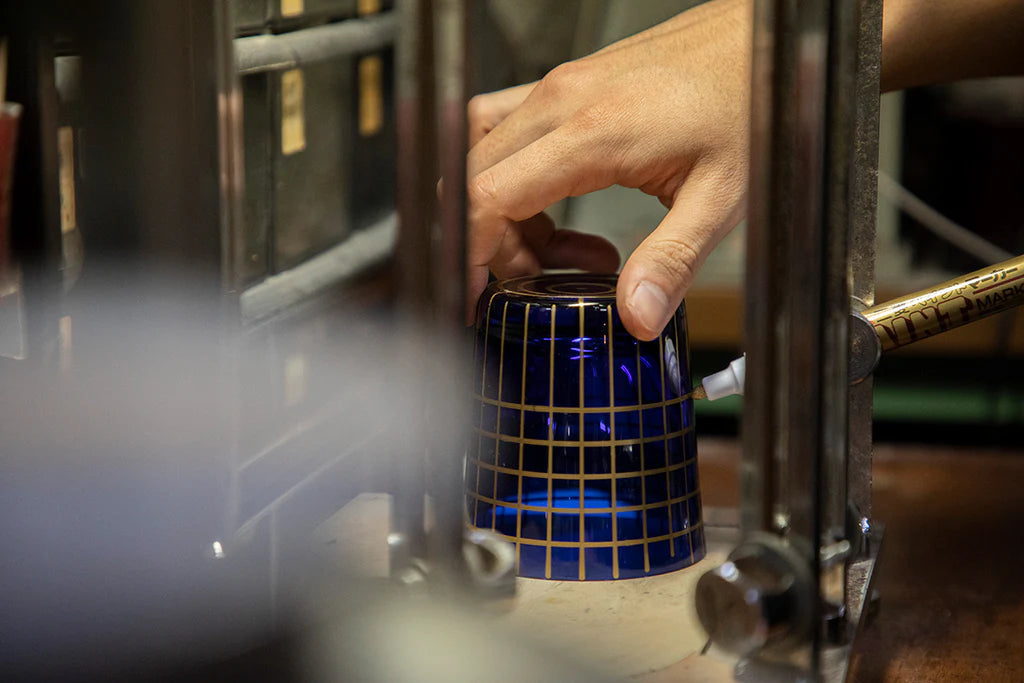
The artist marks simple grid lines on the glass without drawing a design to provide the plan's framework. The design grid is drawn on the glass's surface using a bamboo stick or brush with red iron oxide. Next, the baselines of the design are lightly etched using a whetstone. Relying on these fine marks and lines, the delicate patterns of Edo kiriko are created with the artisan's expertise and skills.
First Cut
The base design is cut to about three-quarters of the final width and depth. The surface of the glass is cut using a sand paste-coated metal disc rotating at high speed. Generally, emery powder with many abrasive particles is used to create the sand paste. The clear pattern border lines and the irregular patterns are cut little by little. The balance between the thickness and depth of the cut lines relies upon the artisan's years of experience, as there are no detailed sketches.

Adjustments
The patterns cut in the second stage are adjusted, and the surface is smoothly polished in this process. A whetstone disc, natural or artificial, is used to cut delicate patterns which cannot be created with the metal disc used in the prior process. This is the last cutting stage to complete the designs, so careful work is required not to leave any powder residue and to ensure a brilliant finish.

Polishing
This is the final stage of production, and it is usually carried out on soda-lime glass (most prevalent type of glass). The opaque surface left by the third stage is returned once more to its original transparent state, with the attractive shine and sparkle typical of Edo kiriko. Chemical processing with hydrofluoric acid is also applied for high-class crystal glass. Depending on the piece, a variety of different polishing discs are used, such as paulownia wood discs, willow wood discs, hair brush discs, and belt discs. The final work is polished by applying water and polishing powders to obtain a glittering finish, while fine sections are polished with a cloth or a brush. To complete the final polishing, a cloth buffing disc is used to bring out the sparkle and shine of the cut glass.