
What Does Vase Mean?
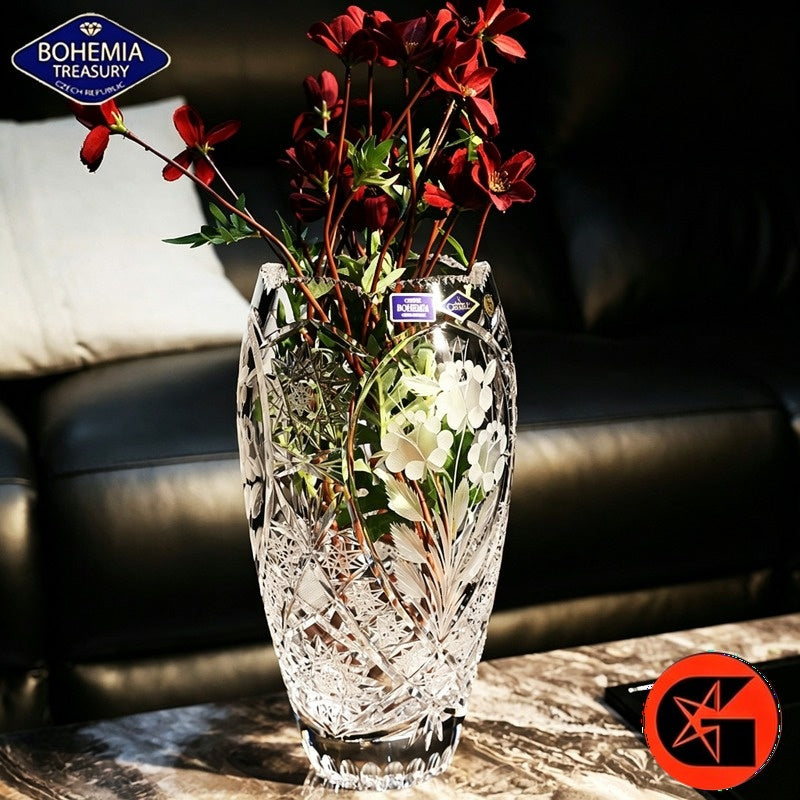
The term "vase" appears simple, and we often use it without a second thought—viewing it merely as a vessel for flowers, a decorative accent, or an object resting on a table or mantelpiece. Yet, if we pause to reflect on the true essence of a vase, we discover a far richer significance. A vase is far more than a mere container for blooms; it is a statement of taste and a vessel of cultural history. In the case of true masterpieces, it stands as a work of art capable of imbuing a space with entirely new meaning simply by its presence. The handcrafted Bohemia crystal glass vase serves as a perfect example, vividly illustrating the profound depth a single object can embody.

The Literal Meaning: Form and Function
At its most fundamental level, a vase is simply a vessel. It holds water, supports stems, and keeps cut flowers fresh while maintaining their elegant arrangement. Most dictionary definitions of a vase go no further than these functional descriptions. Yet, even the simplest vase embodies a range of design considerations: the width of the opening, the depth of the base, the thickness of the walls, and the balance between height and capacity. A neck that is too narrow struggles to accommodate a full bouquet, while a base that is too light makes the vase prone to tipping over. Whether it is an inexpensive earthenware piece or an exquisite crystal showpiece, these practical factors shape the form of every vase.
The BOHEMIA vase places great importance on these functional fundamentals. Its weighted base offers reliable stability, ensuring the vase remains upright even when holding tall, voluminous bouquets. The rim is finely polished to a smooth finish, ensuring a pleasant feel against the hand and preventing any abrasion where the stems rest. These details may seem minor, but they determine whether a vase becomes a frustrating nuisance or a truly excellent, practical object.
The Material Meaning: Why Crystal Matters
The essence of a vase is inextricably linked to its material. Whether crafted from earthenware, glass, porcelain, or crystal, each material evokes unique associations and offers distinct visual qualities. Among these, crystal glass holds a pivotal place in the history of decorative arts. Unlike ordinary glass, crystal incorporates specific minerals to enhance its refractive index, allowing it to refract and scatter light in ways standard glass cannot match.
BOHEMIA vases originate from the Czech Republic, a nation with a centuries-old tradition of glassmaking. Bohemian crystal has been highly esteemed across Europe since the Renaissance; its craftsmanship—encompassing layered cutting, engraving, and meticulous polishing—has been refined by generations of artisans. The creation of each vase demands exceptional skill and patience, involving a complex series of manual processes. The deep floral motifs and precise geometric facets adorning the vase are not printed or molded but are carved directly into the glass; this technique imparts a unique surface texture that captures and refracts light from every angle. The finished vase gleams with the brilliance of a gemstone, its character seemingly shifting with the changing light and shadow throughout the day.
The Decorative Meaning: From Container to Centerpiece
Here is where the meaning of "vase" expands beyond function. A vase can be purely practical—a vessel for flowers—or it can stand alone as a decorative centerpiece, needing nothing but itself. The BOHEMIA vase belongs firmly in the second category. Its sculpted surface and dramatic refractive qualities make it a statement piece, capable of elevating a room whether it holds a single stem or nothing at all.
This dual identity is central to what vases mean in our lives. They occupy a space between utility and art. A vase is not a painting, framed and hung on a wall; it is an object that lives among us, on tables and shelves, in entryways and dining rooms. It participates in daily life even as it decorates it. When a vase is beautiful enough, it stops being a background object and becomes the focal point—the thing the eye returns to.
The Cultural Meaning: Vases as History
Across cultures and centuries, vases have carried meanings far beyond their practical use. In ancient Greece, painted vases depicted myths, athletic competitions, and everyday scenes, serving as both functional pottery and historical record. In China, porcelain vases were prized for their glaze and form, and they became symbols of refinement and imperial power. In seventeenth-century Holland, the tulip vase—a multi-spouted vessel designed to display individual blooms—was a status symbol tied to the tulip mania of the era. In Japan, the vase plays a central role in ikebana, where the choice of vessel is as important as the arrangement itself.
The BOHEMIA vase carries this cultural inheritance forward, though in a different register. It is not a historical artifact but a contemporary object, made in a tradition that stretches back centuries. Its floral motifs connect it to the long history of botanical decoration in European craft, while its geometric cuts reflect a modernist sensibility. It is both old and new, rooted in Bohemian glassmaking heritage yet perfectly at home in a contemporary interior.
The Emotional Meaning: What a Vase Holds
For an individual, a vase may well hold the deepest emotional significance. Think back to the vases in your childhood memories—the one on your grandmother’s dining table, the one holding fresh blooms on a hospital windowsill, or the one received as a wedding gift and cherished for decades. A vase holds more than just water and stems; it cradles memories and the imprints of time. Standing quietly in a corner of the room, it silently gathers unique meaning as the years go by.
With its substantial base and handcrafted, textured surface, the BOHEMIA vase is precisely the kind of object capable of holding such memories. It is not a disposable item, nor is it subject to the whims of fleeting trends; it is crafted for enduring use and to be passed down through generations. Whether you fill it with fresh flowers or simply let it stand alone to catch the play of light and shadow, you are participating in a long-standing tradition of domestic aesthetics—one that traces its roots back to the dawn of human settlement.
Conclusion: The Many Meanings of a Vase
So, what exactly does a "vase" signify? It is at once a vessel for holding objects and a bearer of material, craftsmanship, ornamentation, culture, and memory. While a vase is inherently a functional item, when crafted to perfection, it transcends utility to become a work of art akin to sculpture; it serves as both a container for flowers and a vehicle for meaning. The BOHEMIA handcrafted crystal glass vase perfectly embodies these multifaceted qualities: originating from the Czech Republic and shaped by exquisite craftsmanship, it features deep engravings and precision-cut facets. With its substantial weight and balanced center of gravity, it presents a striking, dynamic silhouette while dazzling with the brilliance of a gemstone. This is a vase in the truest sense—one that unites beauty in all its forms.

Leave a comment
This site is protected by hCaptcha and the hCaptcha Privacy Policy and Terms of Service apply.